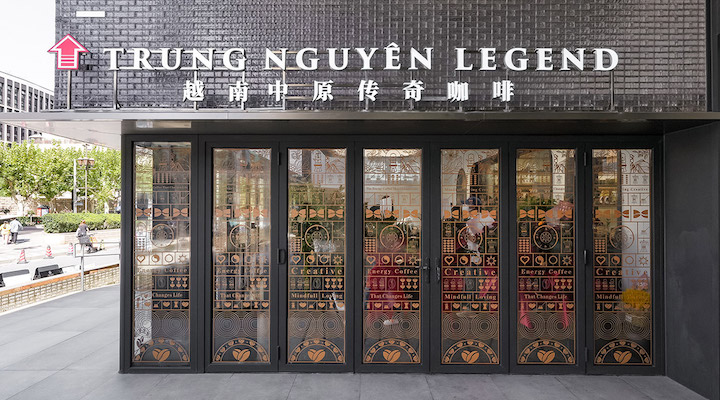
Trung Nguyen Breaks Ground on $83.6 Million Instant Coffee Hub, Tapping Vietnam’s Robusta Legacy
June 30 - 2026
Coffee Geography Magazine
Trung Nguyen Legend, Vietnam’s most iconic homegrown coffee corporation, has officially launched the expansion of its processing complex in Dak Lak province, a move set to create Southeast Asia’s largest and most advanced instant coffee manufacturing facility. The initial investment of nearly $45.6 million will be followed by a second phase worth $38 million, bringing the total project value to $83.6 million. The expansion, which includes a brand-new coffee factory and a 2.5-hectare enlargement of an existing processing plant, aims to deepen Vietnam’s role in the global coffee value chain and harness soaring demand for robusta beans.
Scheduled for completion in 2027, the project will lift Trung Nguyen’s total number of factories to five, three of which will be clustered in Buon Ma Thuot, the historic heart of Vietnamese coffee. The company said the centerpiece—the Trung Nguyen energy coffee factory—will be built to net-zero sustainability standards, incorporating renewable energy and circular water systems, and will focus on high-value soluble and instant coffee products for both domestic and export markets. The move aligns with Vietnam’s ambition to elevate Buon Ma Thuot into a global coffee processing hub and push the nation’s coffee industry toward a target value of $20 billion.
The audacious scale of the investment is rooted in Vietnam’s agricultural rise. The country is the world’s second-largest coffee producer but the undisputed robusta king. The bean makes up over 95% of its harvest. In 2025, coffee exports soared 52.5% to a record $8.6 billion, according to the Ministry of Agriculture and Environment, cementing coffee as a strategic export powerhouse.
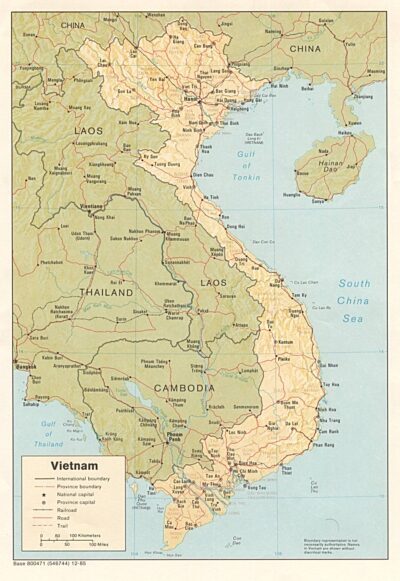

Coffee was not always a Vietnamese stronghold. The crop arrived with French missionaries in 1857, but early arabica plantings in the north struggled. It was the resilient robusta that found its true home in the early 20th century on the volcanic basalt soils of the Central Highlands. Colonial authorities established sprawling plantations around Buon Ma Thuot, creating the coffee capital. War and collectivization later decimated the sector, yet the Doi Moi economic reforms of 1986 ignited a stunning revival. Smallholders, given land-use rights and export incentives, blanketed the highlands with robusta. By the early 2000s, Vietnam had eclipsed Colombia to become the number two coffee producer, pulling millions out of poverty.
Today, robusta’s star is shining brighter than ever. Climate change threatens arabica crops, pushing roasters to blend in more robusta for instant coffee and ready-to-drink products. Vietnam, especially Dak Lak, sits at the center of this shift. The province is the world’s largest robusta producer, supplying more than 40% of Vietnam’s coffee exports to over 70 countries. Yet for decades, most added value flowed overseas to international roasters.








Trung Nguyen’s expansion seeks to change that equation. By transforming raw green robusta into premium instant coffee, coffee concentrates, and branded consumer goods on home soil, the company aims to capture more of the supply chain’s profitability. The new net-zero factory symbolizes a departure from the commodity trap, marrying Vietnam’s low-cost, high-volume farming muscle with advanced processing technology and sustainability credentials demanded by discerning global buyers. When operational, the facility will churn out products that carry the story of Buon Ma Thuot from the red soil to the supermarket shelf.
“We are not just building a factory; we are building a future where Vietnamese robusta is synonymous with quality and innovation,” a company spokesperson said at the ground-breaking ceremony, which drew government officials and international buyers. The project is expected to create thousands of jobs in the region and strengthen the resilience of a sector that has faced volatility in global commodity markets.
As processing lines rise among Dak Lak’s coffee trees, they signal a shift from raw bean supplier to premium finished-product exporter. For Vietnam, the journey from 19th century French experiment to $8.6 billion powerhouse now enters a chapter written in instant granules and sustainable energy.