Nestlé Expands Nescafé Production with More Than $619 Million Investment in Thailand
July 21 - 2026
Coffee Geography Magazine
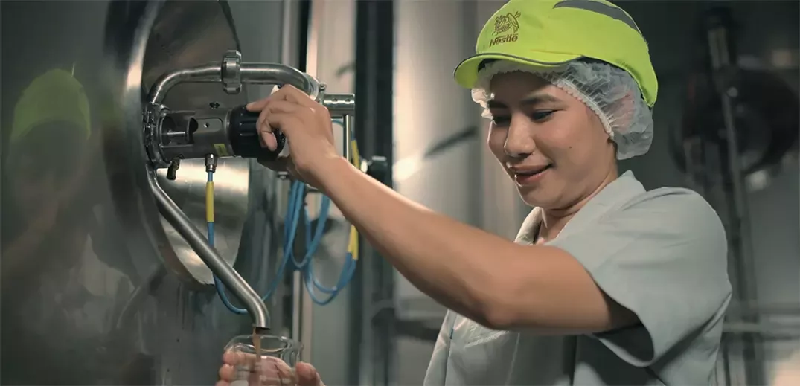
Nestlé is placing a major bet on Southeast Asia’s booming coffee culture, announcing an investment of 563 million Swiss francs (more than $619 million) to build a new, high-tech Nescafé production facility in Thailand. The plant, complete with an advanced on-site distribution center, aims to slash delivery times, sharpen inventory control, and give the Swiss food giant greater agility in a market worth an estimated $1.1 billion.
The new factory will rise in Samut Prakan province, just outside Bangkok, and is expected to begin operations in the latter part of 2028. It will produce the full Nescafé portfolio – from soluble coffee and coffee mixes to ready-to-drink beverages – and will employ more than 500 people. The move deepens Nestlé’s footprint in a country where it has operated for over 130 years and is already a dominant force in coffee.
“Coffee is Nestlé’s largest business globally, and Thailand is one of our biggest coffee markets,” said Remy Ejel, Executive Vice President and CEO of Nestlé’s Zone Asia, Oceania and Africa (AOA). “By investing in Nescafé, one of our most iconic global brands, we are strengthening our ability to meet growing consumer demand and ensuring local brand relevance to deliver consistent, volume-led growth. This new state-of-the-art factory will increase our Nescafé production capacity in Southeast Asia and contribute to the long-term growth of our coffee business in one of the world’s most dynamic coffee markets.”

Remy Ejel, Executive Vice President and CEO of Nestlé’s Zone Asia, Oceania and Africa -AOA.
The facility is designed as a showcase of next-generation manufacturing. Nestlé says it will deploy the latest automation, robotics, and AI-enabled systems to boost quality, efficiency, and sustainability. At its heart lies the company’s newest coffee extraction and aroma recovery technology, which captures the delicate aromas released during roasting and infuses them back into the final product, promising a fresher coffee experience. Automated packing lines, smart transport systems, and digital inventory tools will streamline the journey from bean to cup.
The investment also carries a significant local sourcing commitment. Nestlé expects to purchase more than $110 million worth of local ingredients and raw materials each year, providing a steady demand signal for Thai farmers and suppliers. The plant will draw on domestically grown Robusta coffee, reinforcing Nestlé’s role as a major buyer of the country’s harvest. For more than four decades, the company has supplied coffee plantlets to Thai farmers and run programs promoting regenerative agriculture and climate resilience – efforts it says have improved livelihoods, strengthened coffee quality, and protected the environment. The new factory, Ejel emphasized, builds directly on that legacy.
Thailand’s Board of Investment has backed the project with investment support, seeing it as a strong fit with the country’s ambition to foster a Bio-Circular Green (BCG) economy. The BCG model seeks to align economic development with sustainability, resource efficiency, and waste reduction – principles Nestlé says are embedded in the factory’s design. The on-site distribution center, for example, will not only accelerate deliveries but also reduce transport-related emissions by optimizing logistics.









The announcement comes as global coffee demand continues to climb, with Southeast Asia emerging as a particularly vibrant battleground. Thailand’s coffee market has evolved rapidly, driven by urbanization, a young population, and a café culture that spans street-side carts and premium chains. Nestlé’s expansion signals an intent to lock in volume-led growth by being physically closer to consumers and more responsive to local tastes.
Nestlé’s Thai operations already span multiple factories, but the new Samut Prakan site will be its most advanced coffee facility in the region. It will raise the company’s capacity for soluble coffee and mixes at a time when convenience formats are gaining share. The ready-to-drink line addresses a segment that has grown swiftly as busy consumers grab chilled coffee on the go.
While the precise number of new jobs was confirmed at over 500, the ripple effect on logistics, services, and agriculture is expected to be far larger. The $110 million annual local procurement target alone will inject fresh momentum into the rural communities that supply coffee, sugar, and other inputs. Nestlé’s farmer training programs, which cover techniques like intercropping and water management, are set to scale alongside the factory’s needs.
Construction will unfold over the next two years, with machinery installation and testing leading up to the 2028 launch. Once operational, the plant will serve both the Thai market and wider Southeast Asian demand, cementing Thailand’s role as a strategic hub for one of Nestlé’s flagship brands. For a company that sells more coffee than any other, the $619 million bet in Samut Prakan is a clear statement: in the race to quench the world’s caffeine thirst, speed, technology, and local roots matter more than ever.