Löfbergs Doubles Down on Green Investments, Reporting Major Gains Despite Economic Uncertainty
May 6 - 2026
Coffee Geography Magazine
In an era of global economic volatility and climate instability, Swedish coffee giant Löfbergs has released its latest sustainability report, revealing a strategic pivot toward long-term, resilient investments. The report, published today, showcases concrete advances ranging from regenerative agriculture in Brazil to fossil-free sea freight and a dramatic reduction in production waste.
Despite a challenging external environment, the family-owned business, which roasts enough coffee to produce 10.5 million cups daily, is doubling down on its role as a leader in organic and Fairtrade sourcing.
“When the world around us is uncertain, it becomes even more important to stay the course with long-term efforts,” said Anders Fredriksson, CEO of Löfbergs. “This year’s report shows that Löfbergs continue to invest in the future of coffee.”
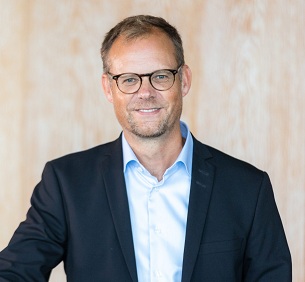
Anders Fredriksson, CEO of Löfbergs
With climate change threatening future harvests, Löfbergs has intensified its focus on the origin farms. Through its partnerships in International Coffee Partners (ICP) and the coffee&climate initiative, the company has now reached more than 195,000 smallholder coffee farmers with development training.
Those efforts are paying off financially for producers. Löfbergs’ purchases of Fairtrade-certified coffee generated an additional SEK 42 million (approximately USD 4.5 million) in premiums for farmers and cooperatives over the last year. Additionally, the company maintains 100 percent traceability for all its coffee beans.
Thirty years after bringing the first container of organic coffee to Sweden, Löfbergs is making history again. The roaster has become one of the first companies in Europe—and the first in Sweden—to purchase coffee certified under Regenerative Organic Certified (ROC).
The new certification goes beyond traditional organic standards, focusing on soil health, animal welfare, and social fairness for farm workers.

Kajsa-Lisa Ljudén- Head of Sustainability at Löfbergs
“Thirty years ago, Löfbergs brought the first container of organic coffee to Sweden. Now the coffee company is the first in the country to purchase ROC-certified coffee,” said Kajsa-Lisa Ljudén, Head of Sustainability at Löfbergs. “This shows that it continues to drive development forward.”
The company’s environmental strategy is yielding tangible results across logistics and production. Löfbergs has achieved 100 percent fossil-free sea freight, a move that reduced CO₂ emissions by 1,400 tonnes over the year. Meanwhile, emissions from the company’s own operations (Scope 1) dropped by 43 percent, largely due to a return to fossil-free biogas at the roasteries in Karlstad.
On the packaging front, the entire range of whole bean products has transitioned to mono-material packaging designed for recycling—a critical step toward the company’s goal of 100 percent circular and renewable packaging.




Even the tiny fraction of coffee that does not make it into the package is being repurposed. Waste in the company’s own production has fallen to just 0.28 percent. The minimal waste that remains is used to produce soil from coffee by-products, giving the material new life in a circular loop.
“These are just a few examples of how sustainability efforts can be translated into concrete solutions that benefit the climate, our business and our customers,” Ljudén added.
According to Löfbergs’ sustainability report, key achievements include reaching more than 195,000 smallholder coffee farmers through development projects, generating SEK 42 million (approximately USD 4.5 million) in additional Fairtrade premiums, and maintaining 100 percent traceable coffee. The company also reports 100 percent fossil-free sea freight, a 43 percent reduction in emissions from its own operations (Scope 1), and waste in its own production at just 0.28 percent.
Löfbergs remains one of the largest coffee roasteries in the Nordic countries. Now led by the third and fourth generations of the founding family, the company employs 200 people and operates roasteries in Karlstad, Sweden, and Viborg, Denmark, where it owns 50 percent of Peter Larsens Kaffe. The group also includes the Kobbs tea brand.