
Tchibo Takes Fight Over Aldi's Discount Strategy to Germany's Highest Court
March 15 - 2026
Coffee Geography Magazine
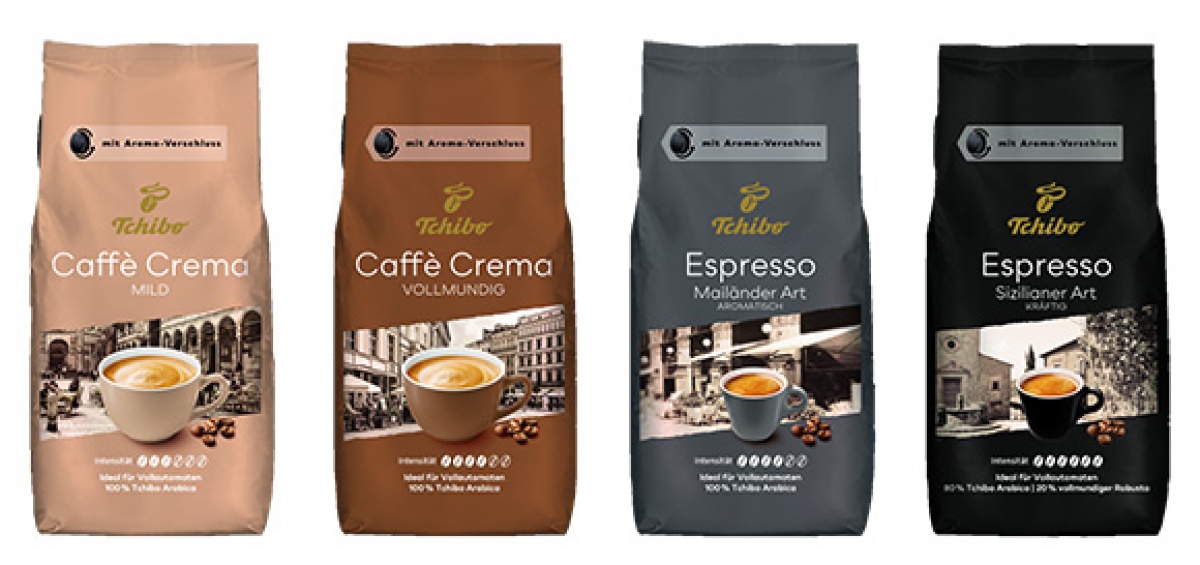
The simmering legal conflict between traditional roaster Tchibo and discount giant Aldi Süd has reached a critical juncture. Tchibo has filed an appeal with the Federal Court of Justice (BGH) in Karlsruhe, seeking to prohibit Aldi from selling its private label coffee below production costs . The move follows consecutive legal defeats at both the Düsseldorf Regional Court and the Higher Regional Court (OLG), which ruled in February that Aldi's pricing practices do not violate competition law.
At the heart of the dispute lies a fundamental legal question that could have far-reaching implications for Germany's food retail sector: Is selling food below production costs legally equivalent to selling it below purchase price?
The Core Argument: A Legal Grey Area
Tchibo accuses Aldi Süd of offering its Barissimo brand coffee at losses of up to two euros per kilo or more since late 2023. The roaster argues this constitutes anti-competitive behavior that harms both market competition and consumers.
"Loss-leading sales below purchase prices are prohibited under current law," Tchibo spokesman Arndt Liedtke emphasized. "This must also apply to loss-leading sales below production costs. From a competition and consumer perspective, it makes no difference whether coffee is purchased as a finished product and resold, or purchased as green coffee, roasted within the company, and then resold. Therefore, all loss-leading sales should be treated equally".
However, the Düsseldorf Higher Regional Court saw the matter differently. The judges determined that Aldi's vertical integration—producing the coffee through its subsidiary New Coffee—fundamentally changes the legal assessment.
Court's Reasoning: The 'Purchase Price' Distinction
The OLG Düsseldorf's 6th Cartel Senate concluded that the prohibition on selling below cost price under Section 20(3) of the German Competition Act (GWB) does not automatically extend to production costs. Since Aldi processes raw coffee before sale through its affiliated roaster, there is no "purchase price" for an unchanged resold product that would trigger the prohibition.
"The regulation is not applicable to this case," the court stated, while granting leave to appeal to the BGH precisely because this legal question requires clarification for the development of German law.
Professor Jens-Uwe Franck, an antitrust law expert from the University of Mannheim, described the OLG's reasoning as "legally sound." He noted that the case illustrates how retail chains increasingly pressure brand manufacturers by positioning private labels and even entering production themselves.






Market Context: Rising Coffee Prices Intensify Conflict
The legal battle unfolds against a backdrop of dramatically rising coffee prices that have made the discount war particularly painful for traditional roasters. According to the Federal Statistical Office, ground coffee was 58 percent more expensive in January 2026 than in 2020. The International Coffee Organization reports that raw coffee prices reached approximately three US dollars per pound in December 2025, compared to just 1.82 dollars two years earlier.
Tchibo itself has been forced to raise prices multiple times—most recently in February 2026—passing these increased costs to consumers. This makes Aldi's ability to offer coffee at a loss particularly galling for the Hamburg-based roaster.
Consumer Impact: Mixed Implications
For German consumers, who consume an average of 163 liters of coffee per person annually, the legal outcome carries practical significance.
If Tchibo ultimately prevails, Aldi might be forced to raise prices on its Barissimo coffee, potentially eliminating one of the market's most aggressive discount offerings. Conversely, if the BGH upholds the lower court's reasoning, it could encourage more retailers to vertically integrate and use loss-leading strategies on key "anchor products" like coffee that draw customers into stores .
Cartel law expert Franck notes that mixed calculations remain permissible: "Even market-dominant retailers are allowed to deliberately offer individual products at a loss for promotional purposes—for example, as so-called key price items with high customer appeal”.

What's at Stake: A Landmark Decision?
The Federal Court of Justice must now resolve whether the legal concept of "cost price" should be interpreted broadly to include production costs for vertically integrated retailers, or narrowly to maintain the current distinction.
Tchibo spokesman Liedtke expressed disappointment with the lower court's ruling, stating it had regrettably "missed the opportunity to halt a structural negative development in the German food trade" . Aldi Süd has declined to comment on the ongoing proceedings.
Legal observers note that the BCH previously addressed similar issues in 2002, when it prohibited Walmart from offering sugar below purchase prices. However, the current case presents novel questions about modern retail structures where discounters have become producers.
The BGH's eventual decision—expected in late 2026 or early 2027—could reshape how German competition law applies to private label products and vertically integrated retailers. For now, Aldi Süd may continue its pricing strategy while the highest civil court prepares to weigh in on one of the most closely watched competition cases in Germany's food retail sector.
Aldi Süd has not indicated whether it would adjust its pricing strategy should the BGH rule against it, and the company continues to maintain silence on the litigation.