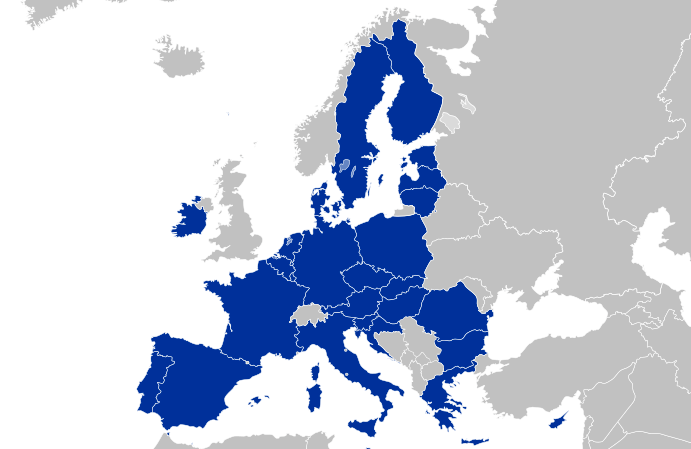
Europe Doubles Down on Quality as It Maintains Grip as World’s Top Coffee Buyer
March 22 - 2026
Coffee Geography Magazine
As global markets brace for the release of 2025 consumption data, Europe is not just holding its ground as the world’s premier destination for green coffee—it is redefining the terms of engagement. Shifting from sheer volume to a pursuit of premium quality, the continent is signaling a new era for the global coffee trade.
Despite persistent economic uncertainty and volatile trade winds, Europe remains the undisputed leader in green coffee imports and per capita consumption. According to the latest market analysis, the continent accounted for 30.7% of global coffee consumption in the 2023/2024 season, absorbing 3.26 million tons. The Asia-Pacific region trails as a distant second at 25.8%.
Europe’s dominance is perhaps best illustrated by its appetite at the consumer level. With a per capita consumption rate of 5.7 kilograms per year, European coffee drinkers far outpace their counterparts in the United States, where the figure stands at 4.8 kilograms.
But the narrative for the European market has fundamentally shifted. According to industry analysts, the story is no longer simply about drinking more coffee—it is about drinking better coffee. While consumption volumes are expected to remain stable in the coming years, market value is projected to grow significantly, driven by a powerful wave of premiumisation.
This evolution is clearly reflected in the beans crossing European borders. In 2024, high-quality Arabica accounted for 70% of all imports, with Robusta making up the remaining 30%. Brazil, Europe’s largest supplier, has capitalized on this trend with remarkable success, recording a 42% surge in exports to the region in 2024 by leveraging its position as a dominant Arabica producer.






One of the most distinctive features of the European market is its overwhelming reliance on green coffee imports. In 2024, a staggering 96.6% of coffee entered Europe directly from producing countries as raw beans—a preference rooted in strategic economics.
Trade duties play a pivotal role; green coffee enters the continent duty-free, while roasted coffee faces tariffs of up to 9% unless specific trade agreements are in place. Beyond cost, green beans offer logistical flexibility, staying fresh for up to twelve months. This allows European roasters to manage supply with precision and, crucially, to tailor taste profiles for the distinct palates of German, Italian, or Belgian consumers—turning proximity into a competitive advantage.
Europe’s coffee supply chain is orchestrated through a network of powerful trade hubs. Germany remains the continent’s largest importer and a pivotal logistics center. The Port of Hamburg—headquarters to the world’s largest coffee trader, Neumann Kaffee Gruppe—serves as the primary gateway. In 2024, Germany re-exported 205,000 tons of green coffee, primarily to neighbors like Poland, Spain, and the Netherlands.
Belgium acts as the second-largest hub, leveraging the massive storage capacity of Antwerp. It re-exported 157,000 tons in 2024, with France receiving nearly half of that volume. Together, these hubs illustrate a complex intra-European trade system where approximately 15.9% of total imports are redistributed before roasting.

While the market currently favors Arabica, the landscape remains volatile. Analysts warn that geopolitical pressures—particularly regarding United States trade policy—could disrupt established flows. With the U.S. implementing tariffs that favor Mexican coffee over Vietnamese, a surplus of Vietnamese Robusta is expected to become available on the European market.
This influx could alter the current 70/30 split between Arabica and Robusta, potentially reshaping sourcing strategies for European roasters who rely on Robusta for espresso blends and instant coffee.
Simultaneously, Europe’s role as the largest market for certified coffee—including Fairtrade, Rainforest Alliance, and Organic—is facing a period of stagnation. The industry is watching closely to see whether the premiumisation trend will revitalize this segment or if the focus will shift entirely to quality-driven specialty beans.
As the world anticipates the release of 2025 data, Europe remains the ultimate destination for coffee producers. With a logistical framework that efficiently distributes beans from the ports of Hamburg and Antwerp to roasters across the continent, the market offers vast opportunities. However, success will increasingly depend on navigating the premiumisation trend, understanding the complex trade hub dynamics, and adapting to global supply shifts triggered by international tariff wars.
For now, one thing is clear: in Europe, the future of coffee is not just about quantity—it is about the strategic pursuit of quality.