
It is Home to Wild Arabica Beans
March 3 – 2021
There are few places in Ethiopia or the world quite like
the Harenna Forest. Spread across the southern slopes of the Bale Mountains, it
is the second-largest stand of moist tropical forest in Ethiopia and the
largest cloud forest in the country.
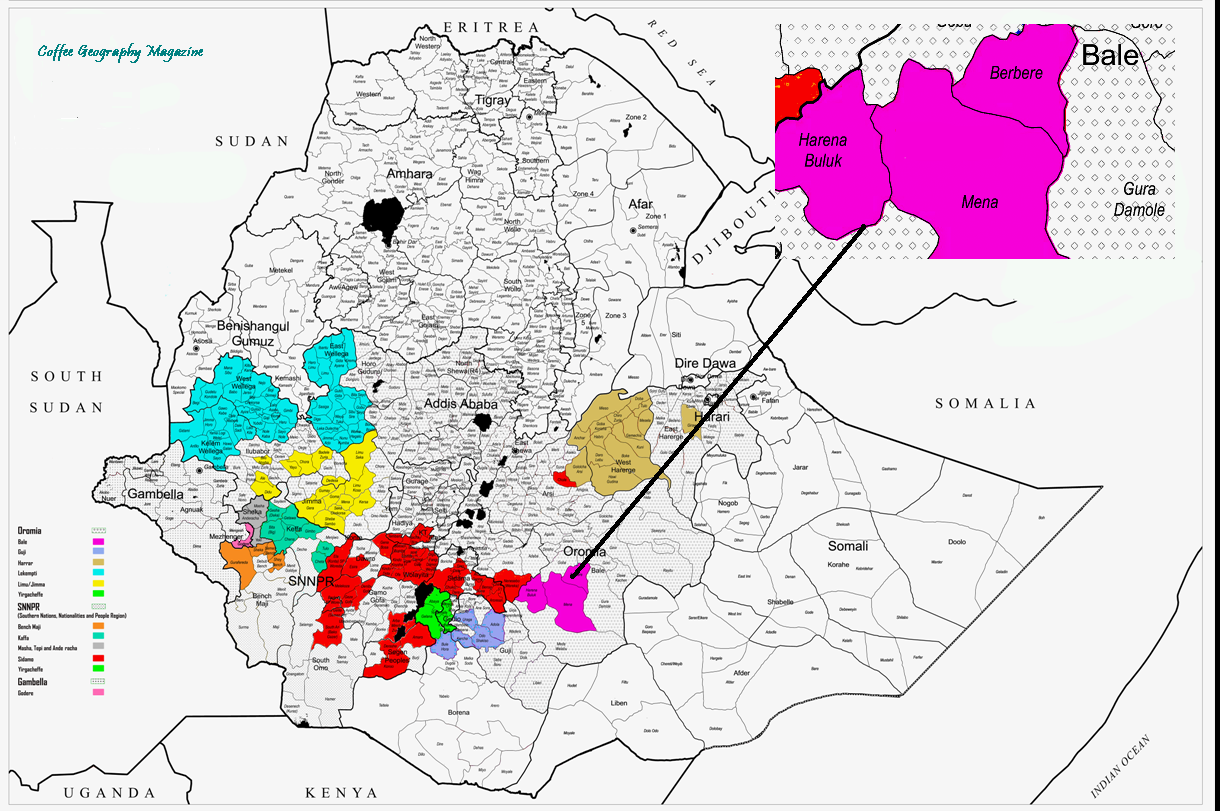
The Bale Mountains in the Oromia Region of southeast
Ethiopia, south of the Awash River, are part of the Ethiopian Highlands. They
include Tullu Demtu, the second-highest mountain in Ethiopia (4377 meters), and
Mount Batu (4307 meters). The Weyib River, a tributary of the Jubba River,
rises in these mountains east of Goba.
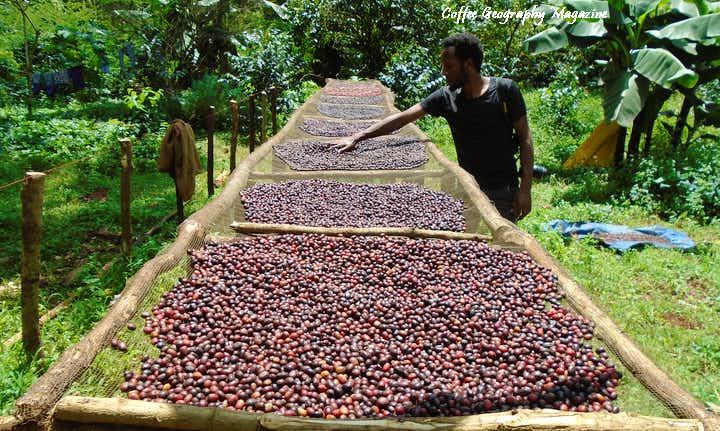
Coffees from Bale Mountain are being natural-processed
and exhibiting all of the wonderful traits that top quality Ethiopian naturals
tend to have: bright acidity and juicy fruit notes. This lot gives a tropical
taste of tangy papaya, as well as a strong presence of strawberry sweetness.
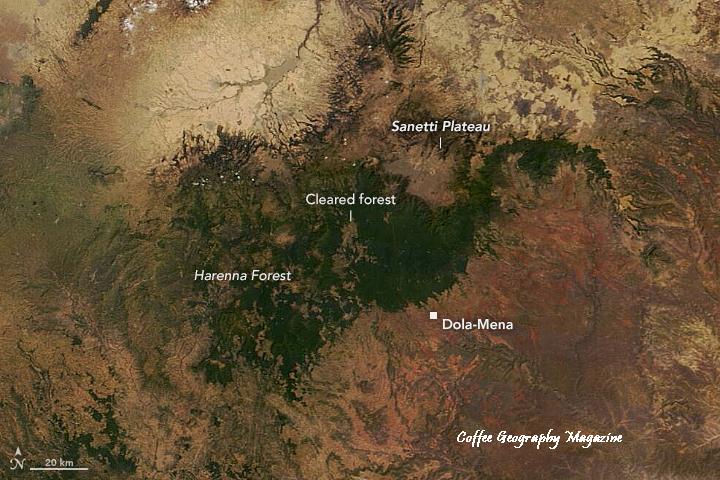
The Tracker satellite acquired this natural-color image
of the forest on February 5, 2021. The forest grows in highland areas at
elevations of 1400 to 3200 meters (4,600 to 10,500 feet) above sea level. From
the mostly treeless Sanetti Plateau, an escarpment drops sharply into a series
of forested ecosystems defined by altitude, including areas where bamboo, tree
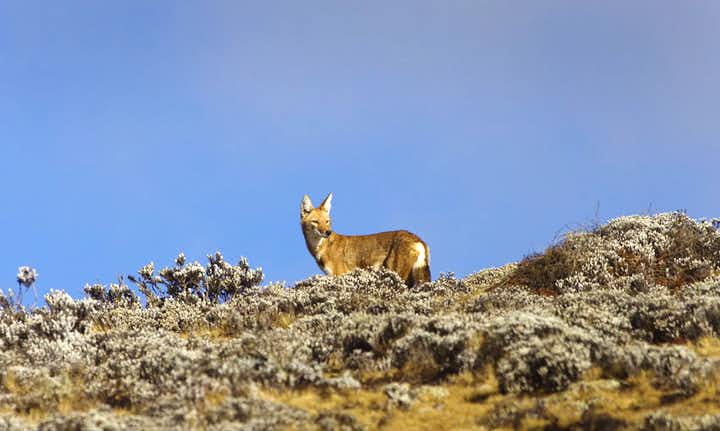
heather, fig, fern pines, hagenia, and wild coffee thrive. Forest wildlife
includes monkeys, baboons, bushbucks, warthogs, lions, leopards, hyena, and
wild dogs.
While there are dense tracts of forest south of the
Sanetti Plateau, a Global Forest Watch analysis of satellite data indicates
that there was significant deforestation along roads and stream valleys in
Hawo, Kumbi, Likimisa Bokore, and Soriba between 2000 and 2019. The data also
show many small-scale forest clearings along the escarpment. Common causes for
deforestation in this area include charcoal production, firewood collection,
and clearing for agriculture. The analysis is led by a team of University of
Maryland scientists and derived from data on tree cover loss collected by
Landsat satellites.
Farmers who care the forest are almost exclusively
responsible for all commercially-available beans. Ethiopia is home to some of
the last remaining wild arabica plants (according to a 2017 study, nearly 60
percent of the world’s wild coffee is under threat of extinction).
Farmers living in the area depend on the crop for income,
and approximately 3,000 individuals gather coffee cherries from the Harenna
forest.