Transforming Stale Corporate Coffee into Specialty Brews for Caffeine-Fueled Performance
May 30 - 2026
Coffee Geography Magazine
For decades, the office coffee pot was a utilitarian afterthought—a burned carafe of generic beans sitting next to a stack of styrofoam cups. But a growing body of operational strategy suggests that era is ending. Forward-thinking firms are no longer viewing premium caffeine as a breakroom amenity, but as a critical productivity tool capable of driving cognitive performance, collaboration, and retention.
According to a new analysis of workplace efficiency, providing high-quality coffee free of charge isn't an overhead expense; it's an investment with measurable economic returns. The primary driver is what analysts call "off-site friction": when companies provide poor breakroom coffee, employees leave the building to visit external cafes. Industry data suggests this costs an average of 15 to 20 minutes per employee per coffee run in lost productivity. Premium on-site options keep teams in the building and engaged, while the cognitive benefits of caffeine—blocking adenosine receptors to reduce fatigue and sharpen focus—further boost output.








Beyond time savings, the coffee station has emerged as an engine of organic collaboration. Dubbed the "modern water cooler," a well-designed coffee hub creates accidental collisions between different departments, sparking cross-functional innovation that rarely happens over email or in scheduled meetings.
The stale pot of basic filter coffee is being replaced by a sophisticated beverage experience. The new standard includes single-origin espresso architectures, advanced cold brew systems, and even full-time, in-house baristas. Employers are discovering that hiring professional baristas transforms coffee consumption from a utility into an experiential benefit, as baristas manage quality control, maintain complex equipment, and provide personalized service that makes employees feel valued.
The modern corporate menu now features precision extraction recipes previously found only in high-end cafes. Offerings include the cortado, which delivers equal parts espresso and textured milk for a quick, concentrated boost; the tonic espresso, a refreshing afternoon pick-me-up made by pouring espresso over artisanal tonic water and ice; Kyoto-style slow drip, a visually striking, ice-by-ice distillation process yielding a complex, tea-like coffee high in caffeine and low in acidity; and nitro cold brew, a nitrogen-infused tap system that creates a creamy texture without added sugar—a high-demand category especially among younger demographics.
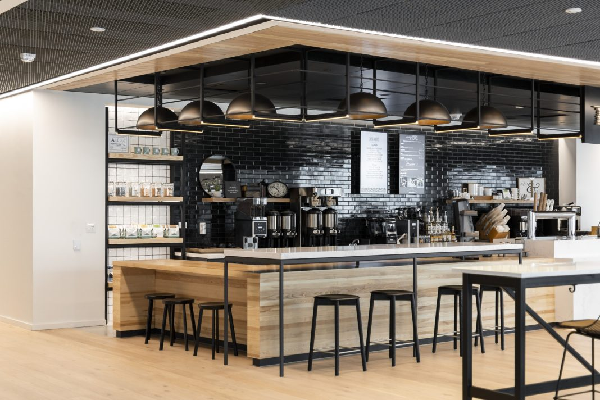
Crucially, experts argue that a standardized coffee station fails because different work environments have vastly different physical workflows and scheduling demands. For corporate headquarters, the model is the centralized specialty café lounge. These spaces feature warm minimalism with natural wood, matte finishes, and acoustic dampening panels designed to encourage extended strategic conversations. Under-counter espresso systems keep the counter sleek and remove physical barriers between barista and employee, while placement in a high-traffic atrium encourages cross-departmental mixing.
For industrial and manufacturing environments—factories, fulfillment centers, and warehouses—the priority shifts from relaxed socialization to rapid, reliable throughput. Here, the solution is decentralized, high-speed modular kiosks built with rugged stainless steel and high-durability surfaces. Placed directly adjacent to production floors or main break hubs, these kiosks utilize automated tap systems for cold brew and batch-brewed specialty filter coffee. Baristas focus on pre-staging high-volume orders or operating dual-group super-automatic machines to ensure zero queue times during strict fifteen-minute shift windows.
By customizing the delivery mechanism to the specific constraints of each environment, firms ensure that every segment of the workforce receives the precise cognitive fuel required to maintain peak operational momentum. The conclusion is clear: caffeine is no longer merely an amenity. It is the engine of the modern workforce, and treating it as a strategic investment is rapidly becoming a competitive necessity.