
How Regenerative Agriculture Is Reshaping Vietnam’s Coffee Heartland
July 7 - 2026
Coffee Geography Magazine
For Vietnam’s coffee sector, the alarm bells are no longer distant. Once celebrated primarily for its staggering output, the industry now confronts a fragmented set of demands from its most important customers. The European Union’s Deforestation Regulation, corporate net-zero pledges, and a growing consumer insistence on traceability have hardened into formidable “green barriers.” At a seminar in early July, the message was blunt: without fundamental change, access to high-value export markets is at risk. Yet within that warning lies an opportunity to heal both the land and the livelihoods that depend on it.
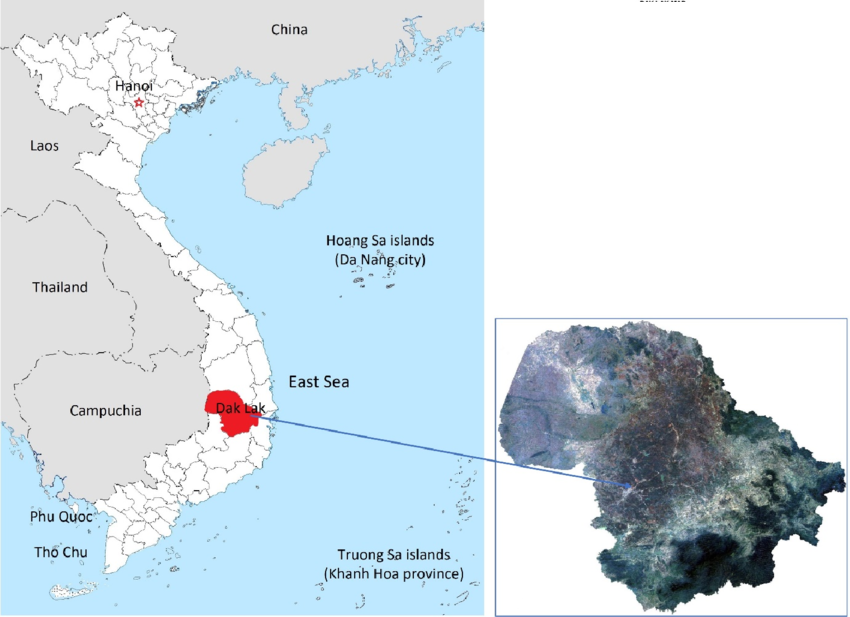
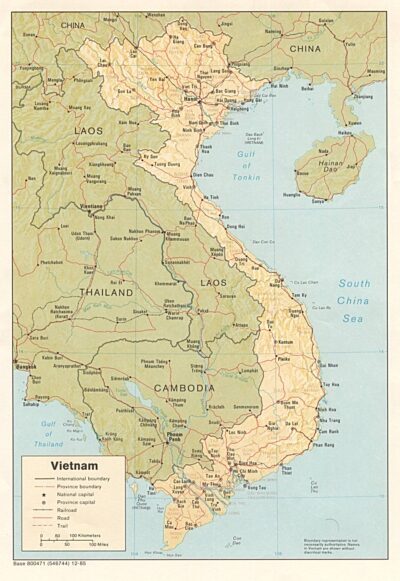
To understand what is at stake, one must first understand the geography of Vietnamese coffee. The country is the world’s second-largest coffee exporter, and its production is overwhelmingly concentrated in the Central Highlands, a basalt-rich plateau stretching across the provinces of Dak Lak, Lam Dong, Gia Lai, Kon Tum, and Dak Nong. Dak Lak alone accounts for roughly 30% of national output, a landscape dominated by smallholder farmers who cultivate predominantly Robusta beans. For decades, these highland regions pursued a high-input, high-volume monoculture model, clearing forests, depleting soils, and drawing heavily on groundwater. That model propelled Vietnam to global dominance in Robusta supply, but it left behind depleted natural capital and a farming population vulnerable to climate volatility and price swings. Today, that legacy is colliding with markets that no longer value volume alone.
The seminar “Regenerative Agriculture – a Sustainable Path for Vietnamese Farming,” held on July 3, framed the response around a single idea: agriculture must move from extracting resources to restoring them. Wouter Melis Van Ravenhorst, managing director of Control Union Vietnam, captured the external pressure.
“Despite being one of the countries with strengths in agriculture, Vietnam is facing increasingly stringent ‘green barriers’ in major export markets,” he said, stressing that regenerative agriculture is no passing trend but an essential requirement of global supply chains.









Nguyen Van Thiet, country manager of the Rainforest Alliance Office in Vietnam, sharpened the internal call to action. “It is the right time for Vietnam’s coffee industry to transform itself to meet the increasingly high demands of the markets. A regenerative farm not only creates green products, but restores and protects biodiversity. This helps build a more balanced relationship between people and nature.”
At the heart of Thiet’s vision is a shift in how farmers perceive their most fundamental asset. “Soil should not merely be regarded as a production resource but as a partner,” he urged. “Farmers should make investments to keep the soil healthy and fertile to ensure sustainable harvests for the future.” This philosophy is not abstract; in the red-earth provinces of the Central Highlands, it has been translated into practical, three-pillar guidance through the NESCAFÉ Plan, the sustainable coffee initiative that Nestlé has run in Vietnam since 2011.
Pham Phu Ngoc, chief representative of the Nestlé Vietnam office in the Central Highlands, explained that the plan’s success depends on making complex regenerative concepts accessible. “The greatest challenge doesn’t lie in technology but helps farmers to access new concepts in an easy and actionable way,” he said. Accordingly, the program distills regenerative agriculture into actions focused on soil, water, and biodiversity.
For soil, farmers maintain permanent ground cover, convert crop residues into organic compost, and adopt balanced nutrient management. The results are striking: a 20 to 40 percent reduction in chemical fertilizer use, improved soil structure, and lower production expenses. For water, irrigation is calibrated to actual crop demand, slashing water use by 40 to 60 percent while cutting the electricity and fuel bills that burden smallholders. For biodiversity, the iconic image of the sun-scorched coffee monoculture is being replaced by layered agroforestry systems, where coffee grows under the shade of pepper vines, durian, and other fruit trees. This intercropping not only shelters the coffee plants from rising temperatures and boosts biodiversity but also diversifies income sources, making farmers less vulnerable to the price volatility of a single crop.
The economic case is as vivid as the environmental one. Program data shows that farmers have seen their incomes grow by between 30 and 150 percent compared with conventional coffee monoculture, driven by lower input costs and diversified harvests.

Mai Thi Nhung, a farmer in Dak Lak, embodies this transformation. On her two-hectare garden, coffee intercropped with pepper and durian, combined with digital farm management tools, now generates over $46,000 per harvest. Across the program’s 15 years, more than 23,000 farming households have adopted new cultivation techniques, reshaping the productivity and resilience of the Central Highlands coffee belt.
Hoang Thi Thu Huong, senior project officer at GIZ, framed regenerative agriculture as a bridge from present compliance to future opportunity. “The distinguishing feature of regenerative agriculture lies in its ability to restore natural resources,” she said. Vietnam’s Ministry of Agriculture and Environment has identified coffee, alongside rice, sugarcane, cassava, and bananas, as a crop with high potential to minimize greenhouse gas emissions under its Low-Emissions Crop Production Plan. By rebuilding soil organic matter and integrating trees, regenerative coffee farms act as carbon sinks, potentially allowing producers to participate in carbon credit markets and create an additional income stream.
Huong concluded that this dual pathway—meeting regulations like the European Union Deforestation Regulation while accessing future environmental markets—will anchor Vietnam’s position globally. “This path will help Vietnam’s coffee industry to reinforce its position in the global agriculture landscape.” For the farmers of the Central Highlands, the green barriers that once threatened to lock them out of markets are being reimagined as the structure of a more durable and prosperous coffee future, one that restores the land that sustains them.
One thought on “How Regenerative Agriculture Is Reshaping Vietnam’s Coffee Heartland”