
Sustainable Coffee Farming in South Sumatra
August 1 - 2021
Coffee Geography Magazine
Sustainable
coffee from Indonesia has huge potentials. On any given morning, when
travelling through the western parts of South Sumatra one may be forgiven for
thinking that all is well in this beautiful countryside. In the distance the
rolling hills are covered with lush green forests with clouds moving along the
tree tops. The meandering rivers flow slowly in the valleys below and the large
variety of insects buzz and zoom with enthusiasm. The many roadside stalls offer
an abundance of fruits and vegetables. Men and women work diligently,
spreading their coffee, corn and peppers out to dry on the patios in front of
the many traditional wooden houses. Slowly they rake through the drying crops,
drawing geometric patterns in the seeds with love and dedication. South Sumatra
is still one of the most fertile and natural areas of Indonesia, with large
National Parks and nature reserves, but first impressions can be deceptive.
Still
some things to do for sustainable coffee from Indonesia
While
taking a long tour through the region to get a better understanding of the
agricultural systems and its interaction with the natural environment, the
Hanns R. Neumann Stiftung (HRNS) team stops often to take in the view and talk
to local farmers. Outside the project area, at a small village on the edge of a
mountainside the view is incredible. We can see for miles into the distance.
The hill behind the village rises steeply. The farmers in the village are all
drying coffee. It is the harvest season. Everyday farmers and their
families travel in the surrounding areas, carrying their coffee back to their
houses on motorcycles or on foot. At home they sort the beans and spread them
on the concrete floors to dry. It looks as if the whole community is
engaged in a seemingly tranquil endeavor.
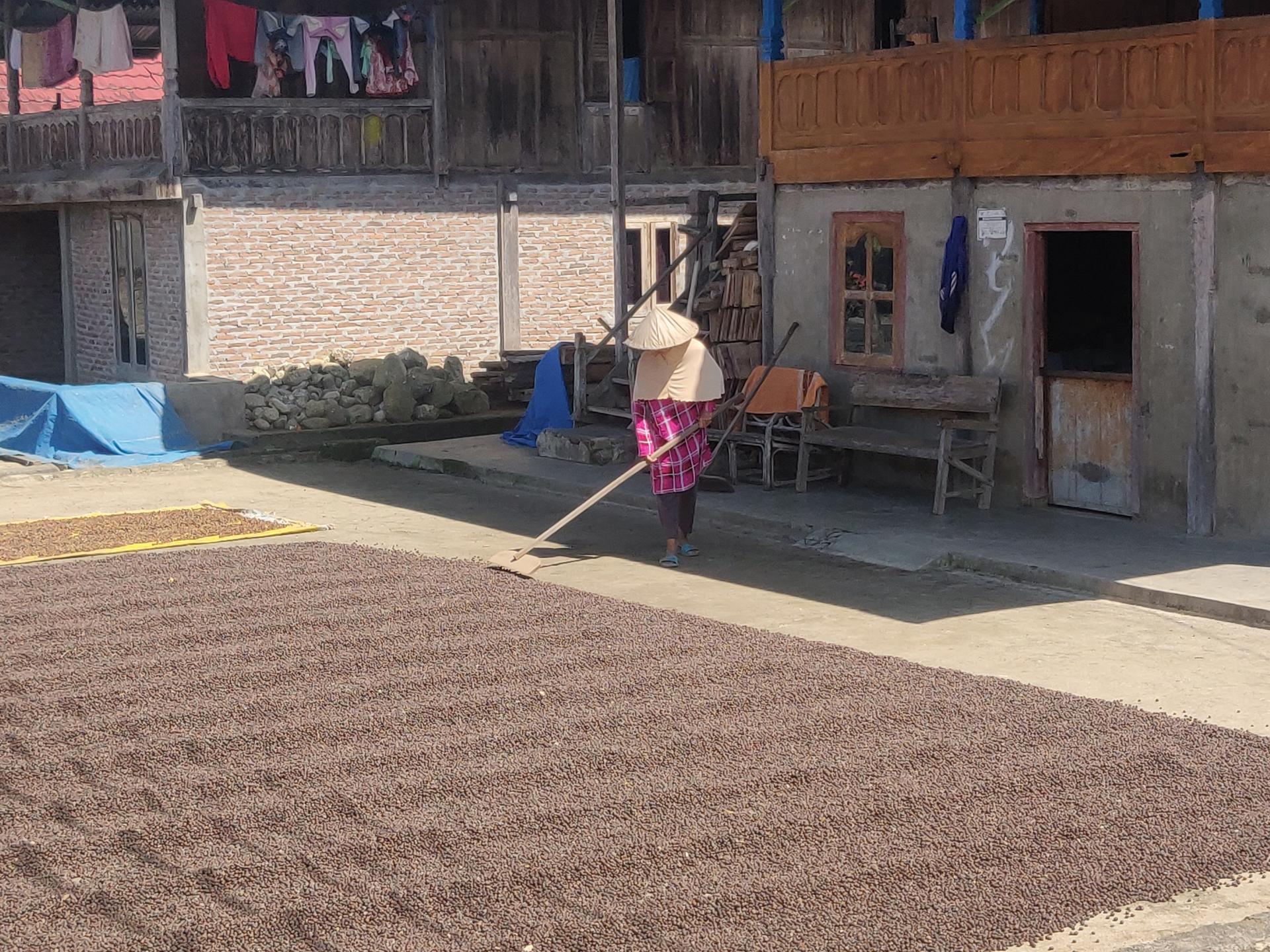
Farmer in a
village in South Sumatra drying coffee
As
the HRNS team walks through the town and towards the field, several issues
become apparent. First it is obvious that the coffee that is being laid out to
dry is not of the best quality. Picking up a handful of samples, it is clear
that many of the beans have been harvested too early. About half of the
berries are green and unripe. The seeds inside are small: some berries are even
empty. There seems to be little of any selective picking of red mature cherries
in this village. Talking to farmers, it soon becomes clear that they are
desperate for an income. With the coffee almost ready to pick, they cannot wait
any longer. They have bills to pay and are short of food. The alternative of
waiting another week or two for the berries to ripen is simply not a
possibility.
Many
of the drying coffee also shows signs of mold. Farmers say that the
insistent rain of the last weeks has slowed the drying process. With no
alternative but to cover the berries with plastic when the rain falls, fungus
has the time to spread. It is slowly damaging the beans, lowering its potential
price in the market.
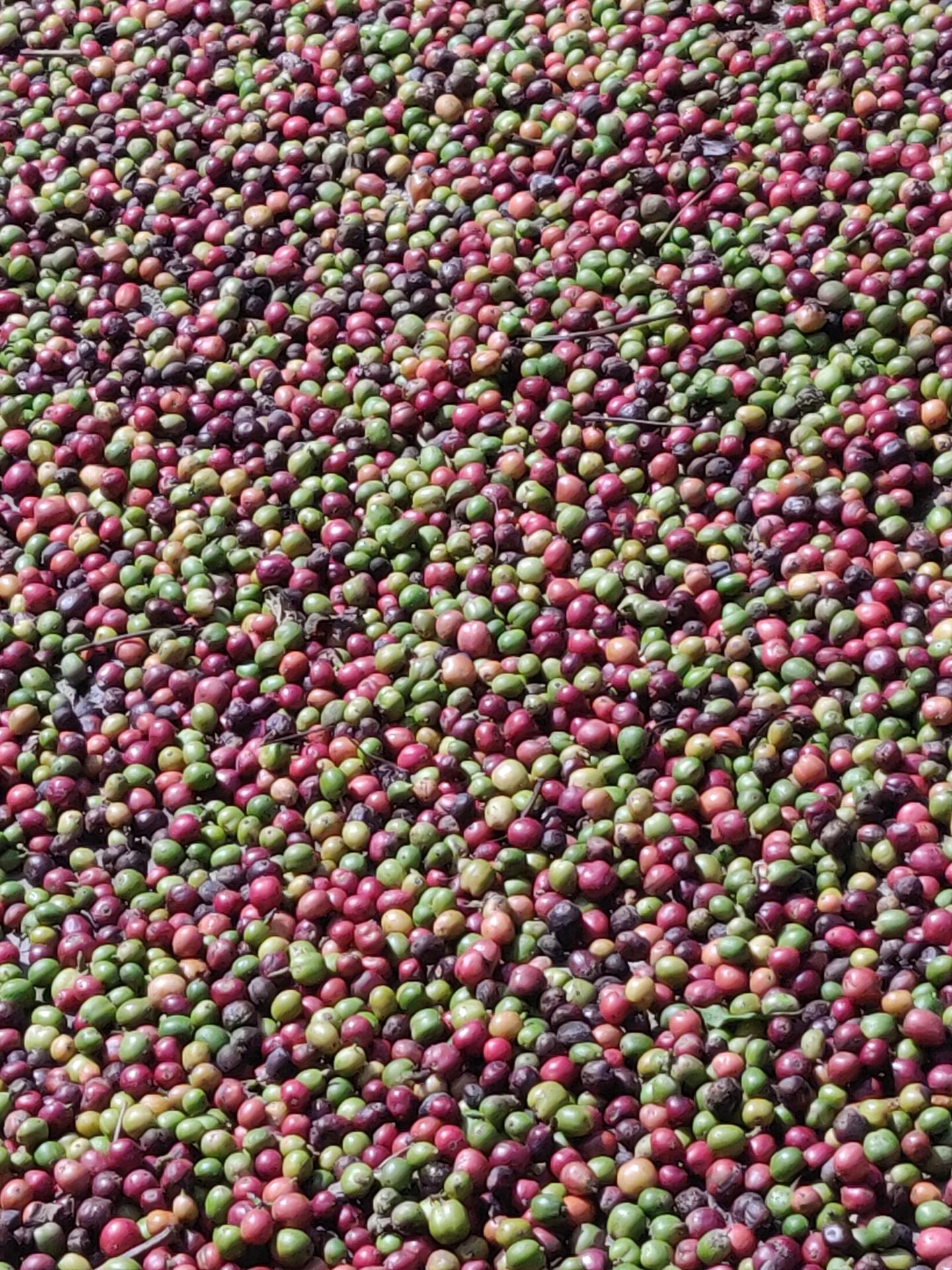
Green coffee cherries that have been harvested too early
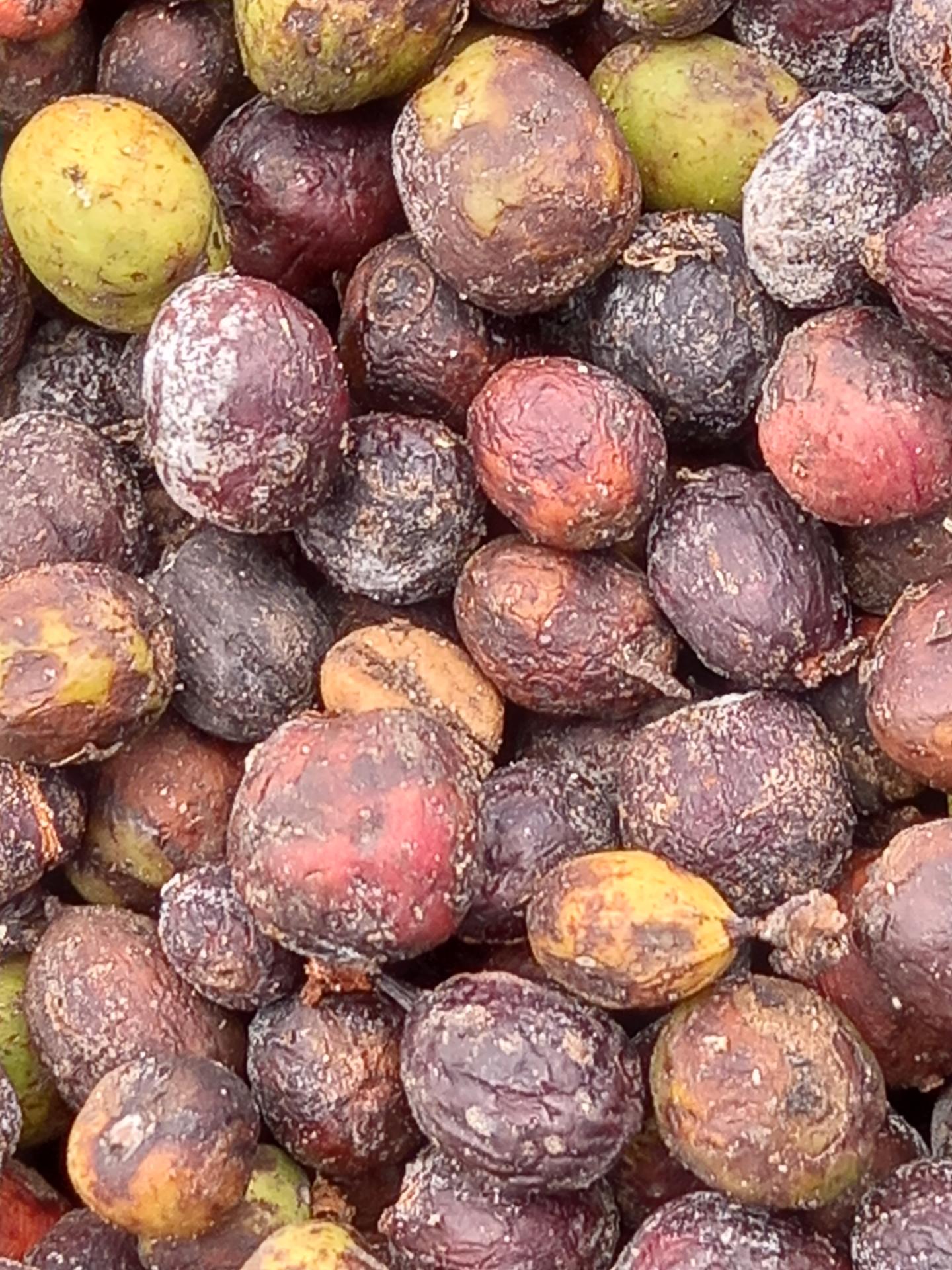
Drying coffee showing signs of mold
More
concerning problems become apparent as the team walks through the fields that
are outside their project areas. Not only are the coffee plants we see
unproductive, with a few berries on the branches, but the bushes are being
scorched by the tropical sun. The farmers have removed most of the shade trees
with the unfounded belief that this would boost production. They have also
removed any ground cover, thinking that any other plants would compete with the
coffee. Now the soil is being sterilized by the sunlight and when it rains, the
last fertile soils wash down into the rivers. After the rains, the rivers turn
a deep red-brown, taking away the precious nutrients down to the sea. As the
team reaches the top of the hill and looks around, the scale of the problem in
this area becomes all the concerning. As far as the eyes can see, the fields
are in the same worrisome state. This area is slowly but surely turning into
degraded unfertile lands.
Sustainable
coffee projects support smallholders in Indonesia
A
few years ago, the area covered by the J.M Smucker and International
Coffee Partners (ICP) funded project faced a similar threat.
With little knowledge of Good Agricultural Practices, farmers were in the same
downward spiral towards loosing their prime source of income: their productive
lands. With a strong focus on stopping degradation and increasing productivity
HRNS immediately started with introducing the basics of sustainable farming
practices. To increase productivity, better coffee husbandry techniques were
introduced: proper pruning, rejuvenation of older bushes, removing of old and
diseased growth were some of the first steps that farmers learned. This was
quickly followed by the introduction of shade trees and ground cover. Fast
growing banana trees and nitrogen fixing Gliracidia trees were introduced.
These now provide the shade and also food for the farmers and nutrients to the
soils. Farmers were also encouraged to dig water infiltration pits next
to their coffee bushes and fill these with organic mulch. This helped increase
water infiltration and retention, while at the same time helping to improve
soil health. In the following years, with productivity of coffee slowly
increasing, other crops were introduced that complemented the coffee
production. Black pepper, avocado, Japanese papaya, ginger and vanilla have
started to grow in many project farms and are not only increasing the biodiversity
of the coffee farms but are also providing a well needed alternative income to
farmers.
The
family of Pak Jaswadi from Sumber Jay village, are one of the exemplary farming
families who show what differences these Good Agricultural Practices can bring.
Five years ago, Pak Jaswadi received his first training from HRNS Field
Officers. A year later he invested his time in a piece of unproductive coffee
land. Following the guidance he received, the two-acre plot has made an
incredible turn around. The coffee bushes are full of cherries, the avocado
trees are tall and robust and in between are rows of pepper plants: full and
healthy. Under the trees the soil is covered with growth and the earth feels
soft and smells as good soil should. Neighboring farmers are welcome to
visit and Pak Jaswadi proudly states how he now encourages others to follow his
example. Even his son, who was once determined to leave to the city, now
sees a future in farming.
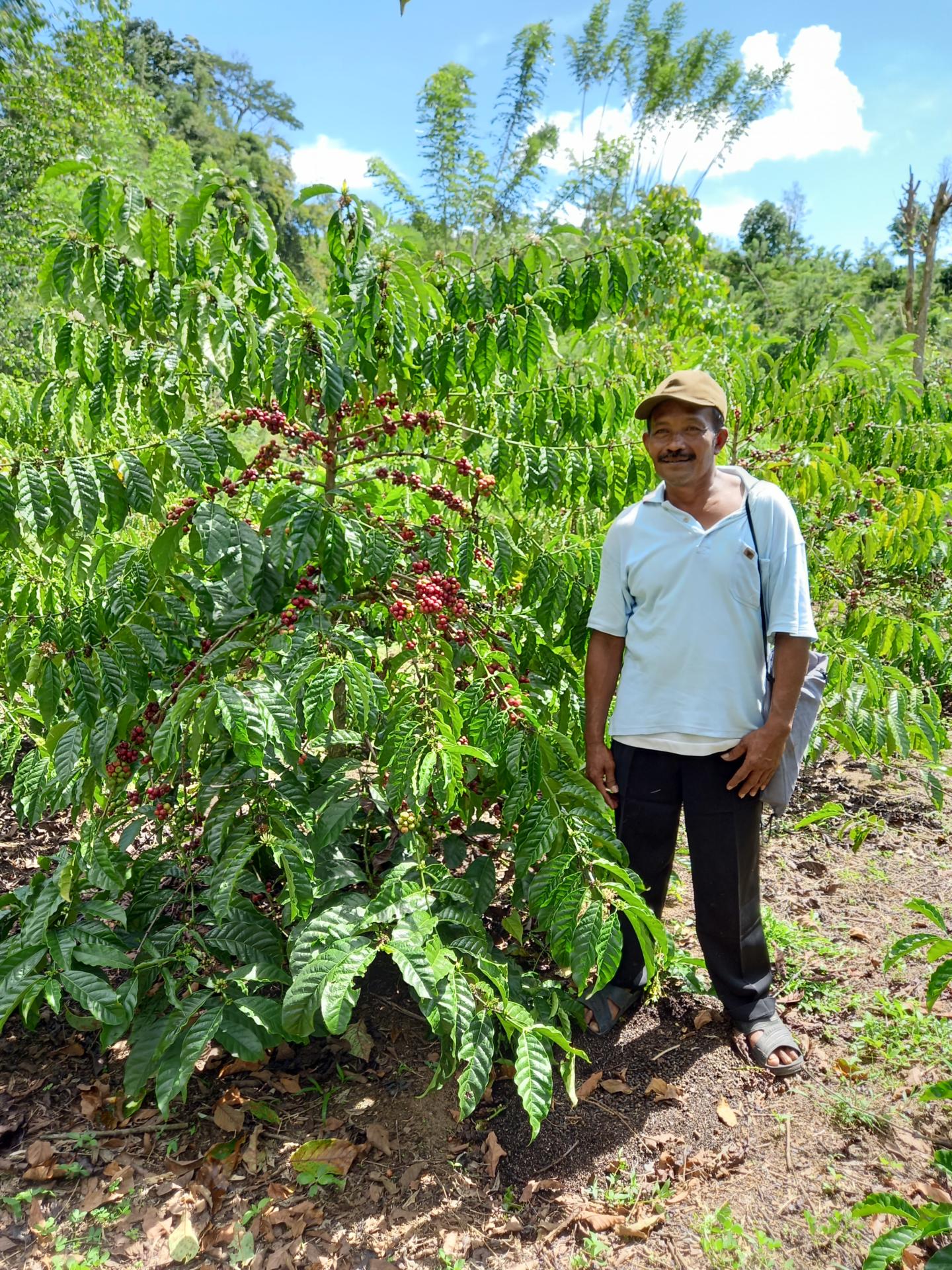
Pak Jaswadi from Sumber Jay village
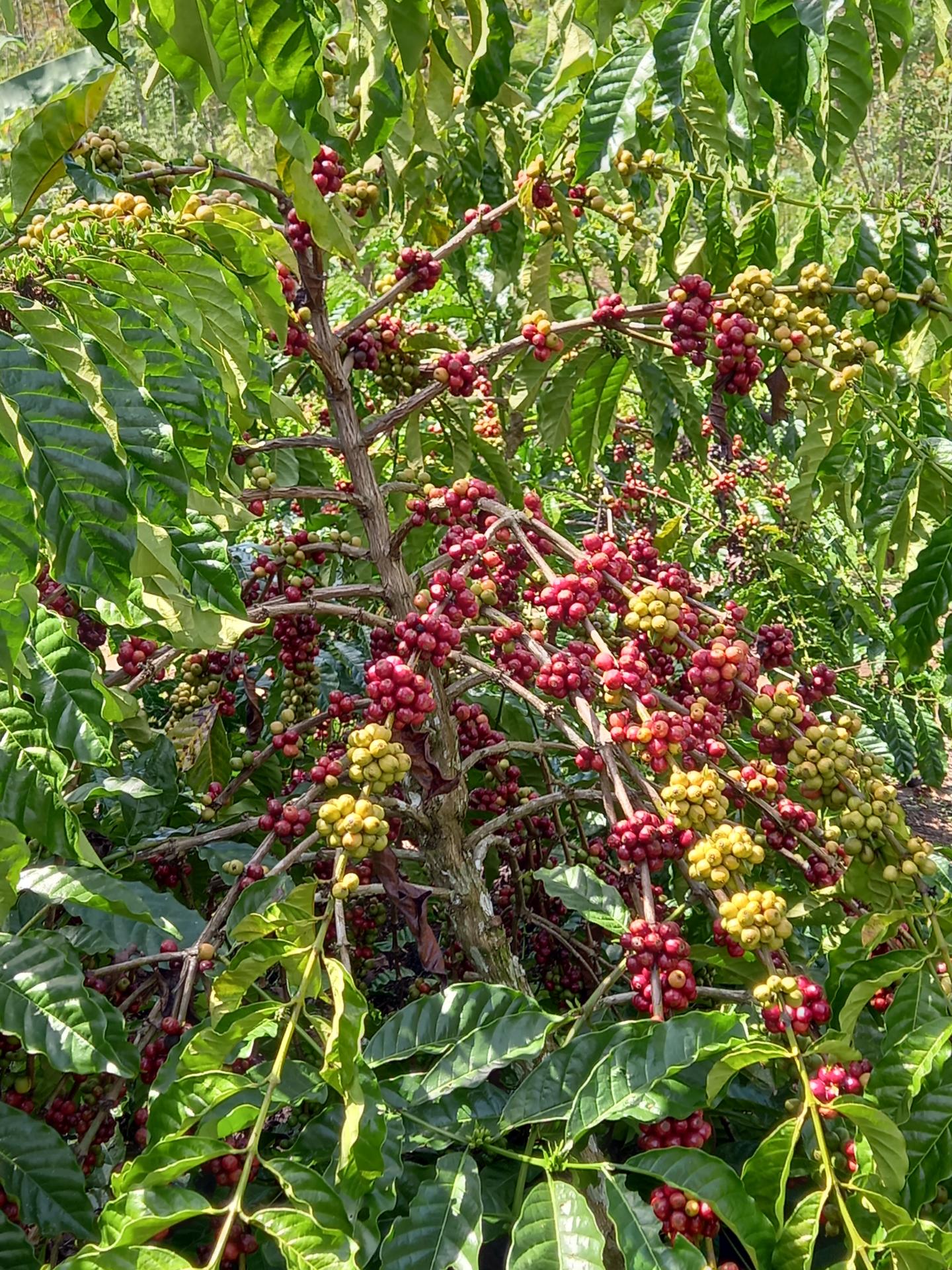
Pak Jaswadi’s healthy coffee bushes full of cherries
Furthermore,
together with five other farmers, Pak Jaswadi took the advice of HRNS to
establish a cooperative. After a training in financial administration, 64
farmers now collectively dry and sort their coffee. They are also the proud
owners of a dry-hulling machine, that removes the shells from the dried
cherries right on the farm. This not only saves valuable coffee, as hulling
costs a percentage of the total being processed, but it also saves time and
costs for transport. Furthermore, the dried shell residue can be used in
producing compost that can go directly back to the coffee farm. Another added
benefit of the cooperative will come in the near future. The cooperative has
used a financial loan from HRNS to support farmers in purchasing their input
supplies. With the interest rate significantly lower than from local
traders, this reduces the financial stress that farmers face. Already
some farmers are seeing a little more room and can wait just that little bit
longer for their coffee cherries to mature. Buyers have seen the
difference and have paid substantially more for the much better green beans.
In
the future, the cooperative is looking to negotiate a commercial loan from a
local bank. This will help the farmers reduce their dependence on local loan
sharks that can ask up to 28% interest. With only a 7% interest, farmers can
invest better in their farms, without feeling the acute need of repayment as
soon as the harvest arrives. Pak Jaswadi is also looking to rejuvenate other
degraded coffee land on his property. He and other farmers have established a
nursery and have selected some of their top producing plants for seedings. Pak
and his family are working towards further increasing the diversity of their farm
and are talking about planting Areca nuts on the borders and high-end wood
species as a long-term investment. They are also looking to buy transparent
plastic to make a covered drying area. This should help significantly in
stopping mold growth during the drying process.
The
HRNS team drives back from Pak Jaswadi’s village after another day of intensive
training on coffee quality selection. They again travel past many coffee areas
that are in a desperate state, where farmers have yet to receive their trainings.
There is an incredible amount of work still to be done in this beautiful and
wild area of South Sumatra. Although the tasks are daunting, the team feels
assured they are making the difference. They are seeing the positive results of
their endeavors. They are confident that the momentum towards sustainable
coffee production will endure. Yes, farmers will follow their example and move
together towards a better coffee future.