
Rwanda’s Coffee Varieties Enter Commercial Trials
October 16 - 2026
Coffee Geography Magazine
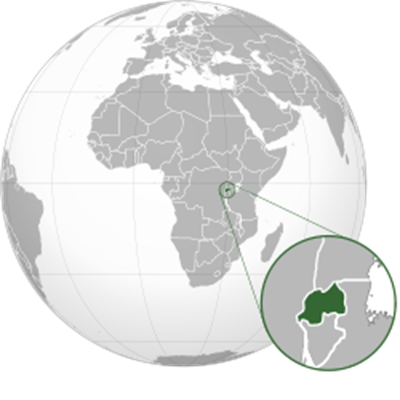
Rwanda is advancing a new generation of coffee varieties into commercial trials, marking a critical step for the 350,000 smallholder households that depend on coffee for their livelihoods. The Rwanda Agriculture and Animal Resources Development Board (RAB) is moving five top-performing varieties—including the renowned specialty coffee Geisha—into the country's formal variety release process.
The move represents a milestone in the decade-long partnership between RAB and World Coffee Research (WCR), bringing climate-resilient, market-responsive coffee varieties one step closer to Rwandan farmer fields.
The introduction comes at a pivotal moment for Rwanda's coffee industry. According to Rwanda's National Agricultural Export Development Board (NAEB), coffee exports reached a record $148.6 million in 2025, up 65% from the previous year. Yet the sector faces mounting challenges.
Approximately 39% of Rwanda's coffee trees are more than 30 years old, and most farms still grow traditional varieties like Bourbon and Typica—prized for cup quality but extremely vulnerable to coffee leaf rust (CLR) and coffee berry disease (CBD). Without better-adapted varieties reaching farmers at scale, Rwanda risks losing ground in the specialty market that has made its coffee famous worldwide.
The government's National Strategy for Transformation (NST2) sets ambitious targets of 32,000 tons of exports and $192 million in revenue by 2029, making improved varieties critical to future growth.
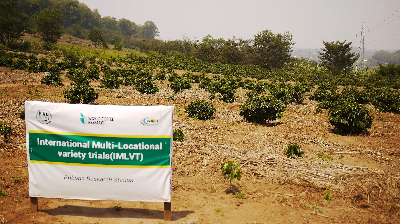
Since 2015, WCR and RAB have partnered on breeding, variety performance trials, and germplasm collection. Rwanda has hosted WCR's International Multilocation Variety Trial (IMLVT)—the world's largest arabica variety performance trial—at three sites: Huye, Rubona, and Ngoma since 2018.
The IMLVT tests how coffee varieties perform under different climates globally, including the higher temperatures and more variable rainfall that mirror conditions Rwandan farmers increasingly face. The initiative is funded by over 200 coffee companies worldwide through World Coffee Research.
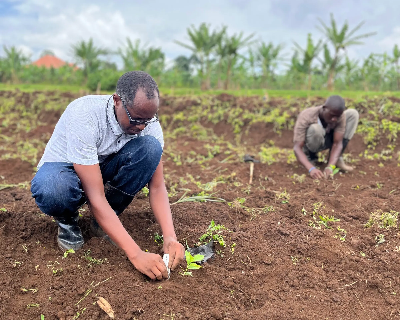
Rwanda's trials have generated eight years of data on yield, disease resistance, and cup quality for high-performing varieties sourced from breeding programs around the world.
"This is what a decade of shared, rigorous science is for—not research for its own sake, but new varieties reaching real farmers, at scale, in time to matter," said Dr. Jennifer "Vern" Long, CEO of World Coffee Research. "Rwanda is beloved by coffee buyers and consumers worldwide; bringing these varieties from IMLVT trials into commercial release pathways expands options not only for farmers, but also for the export markets that place a high value on Rwandan coffee."
Among the varieties advancing toward commercial release is Geisha, one of the most celebrated coffee varieties in the world. Originally from Ethiopia and made famous in Panama, Geisha is prized for its floral, jasmine-like cup profile and consistently commands premium prices in the specialty market.
RAB is also advancing four additional varieties selected for high productivity, strong resistance to rust, and adaptability to Rwanda's changing climate. These varieties produced more than twice as much coffee as older varieties in trials.









"The introduction of the new varieties comes at a critical time for Rwanda's coffee sector," said Simon Martin Mvuyekure, a Senior Coffee Breeding Research Fellow at RAB. "This is the payoff of years of rigorous trial work: coffee trees suited to Rwanda's changing climate and to the quality our farmers are already known for. RAB is excited to bring climate-resilient, market-responsive coffee varieties to the hands of Rwandan farmers."
The varieties are now entering commercial trials as part of RAB's formal variety release procedure—the process Rwanda uses to confirm a new variety's performance before it can be recommended and distributed to farmers nationally. It is the same process that produced RAB C15, a rust- and CBD-resistant variety released in 2015.
RAB expects to complete its formal release procedure over the coming growing seasons, after which approved varieties will become available for wider distribution to Rwandan coffee farmers.
The anticipated release of new-to-Rwanda varieties is only the beginning. RAB is also an active partner in WCR's global arabica and robusta breeding networks, working to breed and test the next generation of high-performing varieties for the country's farmers—ensuring Rwanda's coffee sector remains competitive and resilient for decades to come.