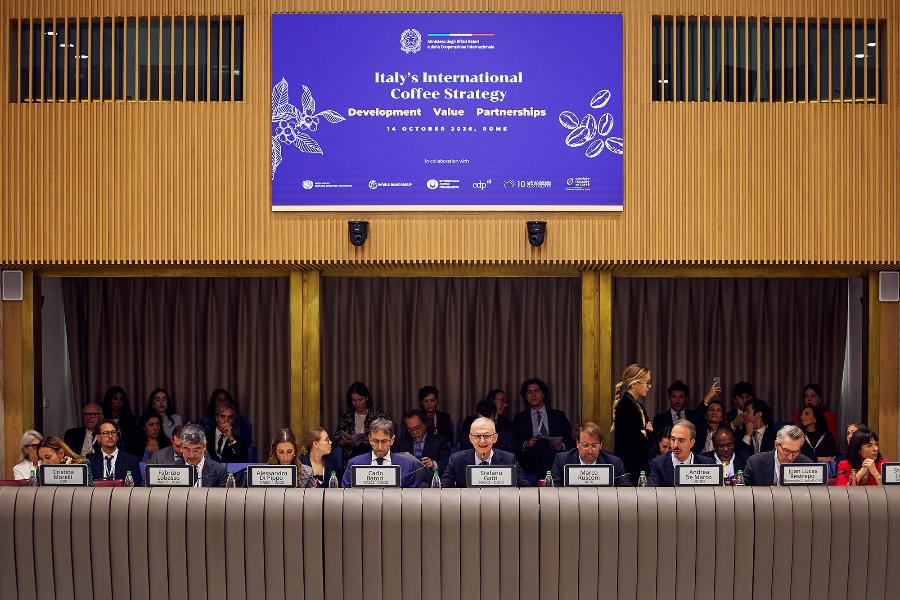
Italy, CDP, World Bank Launch Joint Global Coffee Initiative
October 16 - 2026
Coffee Geography Magazine
The Global Coffee Initiative was presented as a new platform promoted by the Italian Ministry of Foreign Affairs and International Cooperation together with Cassa Depositi e Prestiti (CDP), in partnership with the World Bank Group. The initiative aims to safeguard the future of global coffee value chains by making them more resilient, sustainable and equitable, while strengthening development opportunities for smallholder farmers and local communities.
It was unveiled at the Italian Ministry of Foreign Affairs and International Cooperation during the event “Italy’s International Strategy for Coffee: Development, Value, Partnerships,” organized by the Italy MFA. The event focused on presenting Italy’s strategy for the coffee sector and strengthening partnerships with coffee-producing countries, international organizations, financial institutions and representatives of the coffee value chain.
Coffee provides a source of income for more than 100 million people across approximately 50 countries worldwide, but the sector is increasingly exposed to the effects of climate change and other challenges that threaten its sustainability.
Although Italy is not a coffee-producing country in the agricultural sense—it does not grow coffee—it plays a leading role across the global coffee value chain. Italy ranks as the world’s sixth-largest exporter in the coffee sector and Europe’s second-largest producer of roasted coffee. More specifically, Italy is the EU’s largest producer of roasted coffee, accounting for 25% of total EU production, and the world’s leading exporter of roasted coffee to non-EU countries, with a 32.9% share of the European total. The Italian roasting industry comprises approximately 1,000 companies, directly employing over 7,000 people, alongside more than 300 artisan roasters.
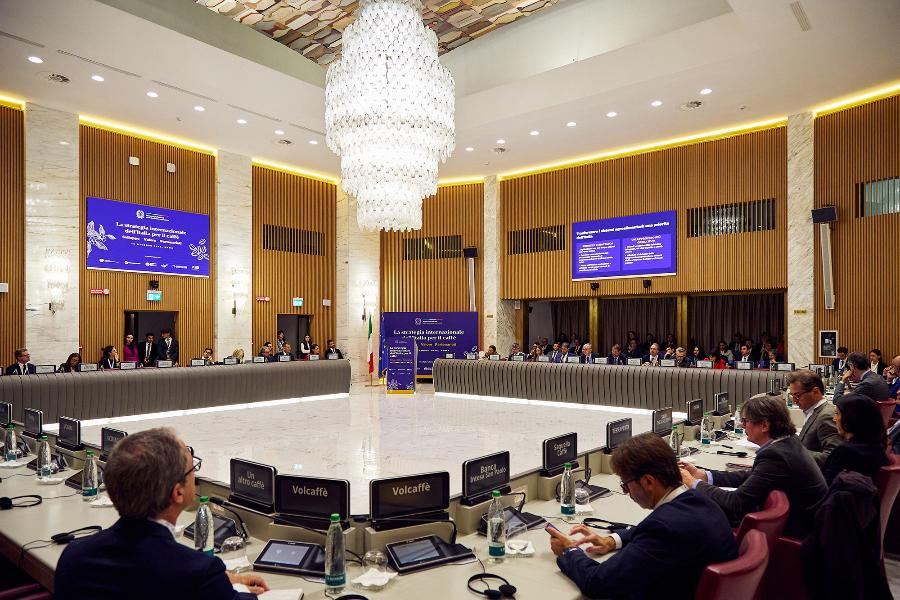
Italy’s global leadership in coffee is driven by a cluster of industrial groups and equipment manufacturers that dominate both the domestic market and international exports. The four largest Italian coffee groups—Lavazza, Illy, Massimo Zanetti Beverage Group and Segafredo Zanetti—together account for approximately 65% of the domestic market and lead the international expansion of “Made in Italy” coffee.
Luigi Lavazza SpA, founded in Turin in 1895, is Italy’s undisputed market leader. The family-owned company operates in over 140 countries through nine production plants across six countries, with 70% of its revenue generated abroad. Lavazza has consistently retained its position as the leading player in the Italian coffee market, with a strong presence in standard fresh ground coffee and pod formats through its Lavazza A Modo Mio and Lavazza Blue lines. Together with Massimo Zanetti Beverage Group, Lavazza is among the world’s top ten coffee roasters, representing 4.1% of global green coffee roasting.
Gruppo Illy SpA, founded in Trieste in 1933, is renowned for its premium positioning and commitment to sustainability. Illy closed 2024 with revenue of €630 million, a 6% increase year-on-year, confirming its leadership in the premium segment. The company is known for its direct trade practices and quality guarantee, targeting niche and gourmet markets.
Massimo Zanetti Beverage Group (MZBG), known for brands such as Segafredo Zanetti, has exceeded one billion euros in consolidated revenue, reaching €1.315 billion in 2025, a 27% increase on 2024. MZBG operates a diversified portfolio with global reach in coffee marketing and distribution, leveraging strategic acquisitions to expand its product offering.
Kimbo SpA, a well-established brand from Naples, is known for its distinctive Neapolitan coffee profiles and aromatic characteristics. The company prioritizes traditional methods while expanding into modern retail channels, capitalizing on the strong local preference for Neapolitan coffee culture.
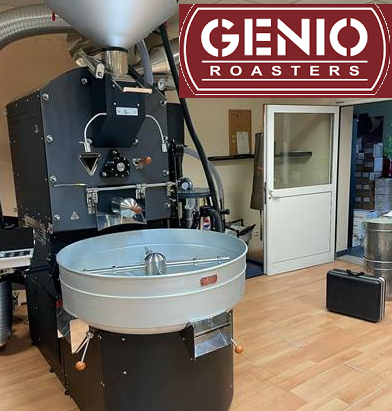







Beyond these industrial giants, Italy’s coffee ecosystem includes dynamic smaller players and equipment manufacturers. Bialetti Industrie SpA, the inventor of the iconic Moka pot, and Gruppo Gimoka Srl were identified as the most dynamic companies in the Italian coffee competitive landscape in 2025, particularly active in the fast-growing fresh ground coffee pods category. Caffè Vergnano, a historic Turin-based roaster, is another notable player, confirmed as the sixth Italian coffee company by market presence. Other significant Italian coffee companies include Caffè Borbone (owned by Italmobiliare), Caffè Trombetta, Caffè Motta, Caffè Carraro, Pellini Caffè, and Caffè Passalacqua, among others.
Italy’s role in the coffee industry extends beyond roasting to the production of coffee-making equipment. De’Longhi S.p.A. , based in Milan, is a global leader in coffee machines, generating more than 60% of its total revenues from coffee-related products. In 2024, De’Longhi consolidated its position in the premium professional coffee segment through the acquisition of La Marzocco, the Florence-based manufacturer founded in 1927 and renowned for producing top-quality semi-automatic espresso machines used by leading cafés worldwide, including Starbucks. The business combination of De’Longhi’s Eversys and La Marzocco has created a world-leading hub in the premium professional coffee machine segment.
Against this backdrop, the Global Coffee Initiative, stemming from the commitment made by G7 Leaders during the 2024 Italian G7 Presidency, will promote public and private investment across the entire coffee value chain. The initiative combines two complementary pillars: a project preparation and technical assistance facility to develop investment-ready opportunities, and a co-financing platform designed to mobilize public and private capital.
Investments will be selected to deliver clear and measurable results: more resilient farms, higher and more stable household incomes, and stronger local value chains capable of creating jobs from bean to cup.
With the launch of the Global Coffee Initiative, Italy is strengthening its commitment to a more sustainable, resilient and inclusive coffee value chain. In this context, CDP will contribute to mobilizing resources and expertise to support coffee-producing countries, while also assessing further interventions to support the sector’s transition and strengthen its capacity to adapt to climate change.