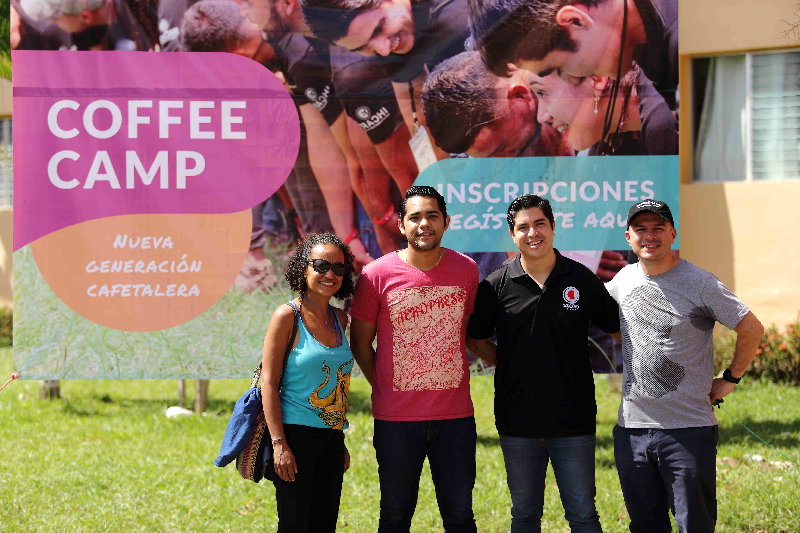
HRNS Kicks Off Coffee Camp 2026 in Honduras to Inspire Youth in Coffee Farming
May 19 - 2026
Coffee Geography Magazine
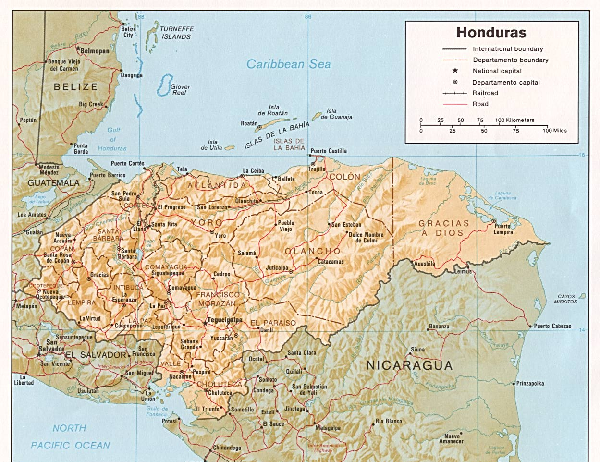
As Honduras faces a critical generational challenge in its coffee sector, the Hanns R. Neumann Stiftung (HRNS) has launched Coffee Camp 2026 at IHCAFE in Corquín, Copán, aiming to inspire and empower the next generation of Honduran coffee leaders.
More than 100 young people from the regions of Copán, Lempira, and Ocotepeque participate in a four-day intensive experience from May 18-21 focused on leadership, innovation, and opportunities within the coffee value chain.
Honduras stands as one of Latin America's leading coffee producers and exporters, with over 120,000 families depending directly on coffee farming. The industry represents a vital economic and social pillar for the nation. Yet the sector faces a troubling reality: generational renewal is stagnating.
According to data from IHCAFE, only 8% of registered coffee producers are between 18 and 30 years old. Studies on young coffee growers reveal significant gaps: only 32% have access to land; less than 12% have access to financing or are linked to cooperatives and associations; just 31% receive technical assistance; and 51% of young people express a desire to migrate in search of new opportunities.
Despite these challenges, there is an encouraging sign: 86% of young people believe coffee farming represents a business opportunity and a viable path for their future development.
"Coffee Camp is a commitment to the future of coffee farming," said Pablo Ruiz, Executive Director of HRNS Central America. "These days mark the beginning of a transformation process for young people that will continue through training in soft skills, vocational education, and even entrepreneurial development. All of this allows us to affirm that when young people believe in their potential, the future of coffee flourishes and coffee landscapes are transformed."
HRNS, an independent non-profit foundation founded in 2005 by Michael R. Neumann and his family—who have deep roots in green coffee trading—has made youth empowerment central to its mission. Headquartered in Hamburg, Germany, the foundation works globally to empower smallholder coffee farming families and support disadvantaged youth through grassroots projects focused on sustainable livelihoods, climate-smart agriculture, and strong community structures.
Since its creation, more than 600 young people have participated in different editions of Coffee Camp across Central America, strengthening their skills, expanding their networks, and developing new life perspectives linked to coffee and rural development.








During Coffee Camp 2026, participants engage in a dynamic program that blends technical learning, cultural exchange, and direct engagement with key actors in the Honduran coffee sector. Highlights include conferences and talks with national and international panelists from the coffee sector; learning stations covering soils, the Coffee&Climate toolbox, agroforestry, circular economy, carbon markets, barista skills, and cupping; discovery visits to Hacienda Montecristo, iconic coffee shops such as Estucafé, Café de las Velas, Cocoa & Café, and Café la Taza, as well as cultural heritage sites in historic Santa Rosa de Copán; a youth entrepreneurship fair promoting innovation and agribusiness; and cultural activities including the Coffee Party, a coffee rally, and a filter brewing methods show.
Coffee Camp 2026 is supported by more than 20 partner organizations, including coffee sector organizations such as IHCAFE, NKG-BECAMO, Estucafé, Café de las Velas, Cocoa & Café, and Café la Taza; cooperatives and associations including APCAFI, APROCCOR, APROCACERCHIL, CAFESCOR, CAFESMO, CAPUCAS, COCAMOL, COPRACNIL, PROEXO, and Río Grande; and a wide range of companies, cooperation and development organizations, and municipalities: Hanns R. Neumann Stiftung, Bayer – BLF, Lavazza Foundation, Solidaridad Latin America, the Tri-National Network of Women of Honduras, El Salvador, and Guatemala (HOSAGUA), the Tri-National Commission of the Trifinio Plan – Trifinio Biosphere Project, the Business Development Center – CDE MIPYME Santa Rosa, Rikolto Honduras, Heifer Honduras, the Municipality of San Marcos (Ocotepeque), the Municipality of La Unión (Copán), and Sustainable Harvest Honduras.