Jiangmen Coffee Festival in China Brews Up Record Attendance, Serving 270,000 Cups to Half a Million Visitors
March 14 - 2026
Coffee Geography Magazine
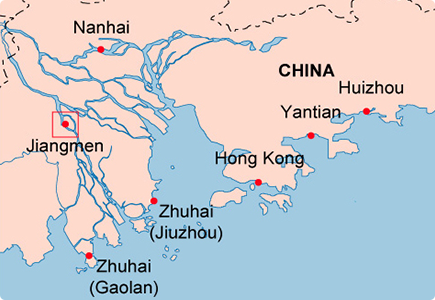
The aroma of freshly brewed coffee hung thick in the air of Pengjiang District last week as the fourth Jiangmen Coffee Culture Festival drew to a close on March 8, leaving organizers and vendors alike buzzing with excitement over record-breaking turnout.
More than 510,000 visitors streamed through the festival's venues over four days, consuming approximately 270,000 cups of coffee in what has quickly become one of southern China's most anticipated culinary gatherings, according to official figures released Monday.
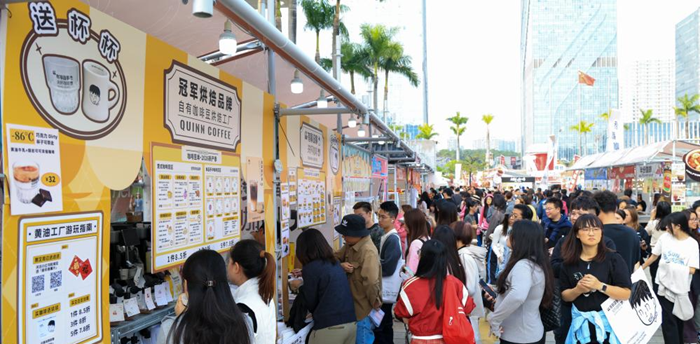
The event, which sprawled across Wuyi Overseas Chinese Square and Wanda Plaza, saw daily attendance surge by over 20 percent compared to the previous festival—a jump that organizers attribute to both expanded programming and the region's rapidly maturing coffee culture.
"This year's energy was completely different," said Li Wei, a barista at a Guangzhou-based specialty roaster who was pouring pour-overs at the event. "On Saturday afternoon, we had a 45-minute queue just for a single-origin Ethiopian. People here aren't just drinking coffee anymore—they're studying it."

A Global Gathering in a Hometown Setting
The festival's scale has grown in tandem with its ambition. More than 330 coffee brands from 13 countries and regions set up operations across the two venues, transforming the city center into an international coffee bazaar. Roasters from Yunnan and Hainan—China's primary coffee-growing regions—rubbed shoulders with exporters from Brazil, Ethiopia, and Uganda, while local Jiangmen cafés showcased their signature blends alongside specialty roasters from Japan, South Korea, and Italy.
For many visitors, the festival offered something beyond caffeine. Interactive workshops tracing coffee's journey from cherry to cup drew curious crowds, while live barista demonstrations became impromptu theaters where techniques were debated and flavors dissected.
Among the demonstrators was 2022 World Barista Champion Anthony Douglas, whose presence drew significant attention. Douglas, who spent two days engaging with festival-goers, said he was struck by the sophistication of local palates.
"The festival has been great. I feel that people here are very passionate about coffee," Douglas said between sessions. "There's a real curiosity here—people want to understand what they're drinking, where it comes from, why it tastes the way it does."
Heritage Meets Hustle
Organizers deliberately wove Jiangmen's unique cultural identity into the festival's fabric. As one of Guangdong's most significant "overseas Chinese" hometowns—a region that sent generations of emigrants to Southeast Asia, the Americas, and beyond—Jiangmen has long maintained transnational family connections that organizers say naturally align with coffee's global supply chains.
Exhibits highlighting the city's diaspora history stood alongside coffee stalls, drawing connections between the movement of people and the movement of goods. It was a thematic choice that resonated with visitors from Hong Kong, Macau, and beyond who traveled specifically for the festival.
"We came from Shenzhen for the weekend specifically for this," said Chen Jie, 34, holding a cold brew in one hand and a map of Jiangmen's historic Kaiping Diaolou towers in the other. "We'll do the coffee thing during the day, then explore the heritage sites in the evening. It's a perfect combination."
The strategy appears to be working: tourism officials noted significant spillover traffic to Jiangmen's historic neighborhoods and culinary destinations throughout the festival period, with many visitors extending their stays beyond the event itself.






Beyond the Brew: An Industry in Overdrive
While the public festivities drew crowds, industry insiders focused on the parallel Coffee Industry Cooperation Exchange, which brought together producers, roasters, equipment manufacturers, and cafe owners for business discussions. Sessions addressed everything from supply chain resilience to the rising costs of green coffee and the particular challenges facing China's domestic coffee industry.
China's coffee consumption has increased by nearly 150 percent over the past decade, according to a U.S. Department of Agriculture report, surpassing 240,000 metric tons annually as café culture spreads beyond first-tier cities into smaller urban centers. The speciality coffee segment has grown even more rapidly, with independent cafés and domestic chains introducing new brewing methods, experimental flavors, and locally roasted beans to appeal to younger consumers.
That growth was evident in the festival's demographics. Young professionals dominated the crowds, phones outstretched to photograph latte art, but they were joined by families, retirees, and groups of students—suggesting coffee's expanding reach across age groups and social strata.
"The stereotype used to be that Chinese tea drinkers looked down on coffee, or that coffee was just for white-collar workers in Shanghai or Beijing," said Liu Yang, a coffee educator who led workshops at the festival. "That's completely outdated now. Coffee is for everyone, and events like this prove it."
Looking Ahead
As vendors packed up their espresso machines and brew bars, conversations had already turned to next year. The 20 percent attendance increase has organizers considering further expansions, possibly adding venues or extending the festival's duration.
For now, Jiangmen has cemented its reputation as an unlikely coffee hub—a city better known for its emigration history and traditional architecture than its caffeine credentials. But with half a million visitors and 270,000 cups served, that narrative may be due for revision.
As one festival banner put it, in both English and Chinese: "Great Coffee Needs No Translation." In Jiangmen this March, it seemed no translation was needed—just a willingness to wait in line.