Resilience and Child Protection in Honduras and Uganda
November 4 - 2026
Coffee Geography Magazine
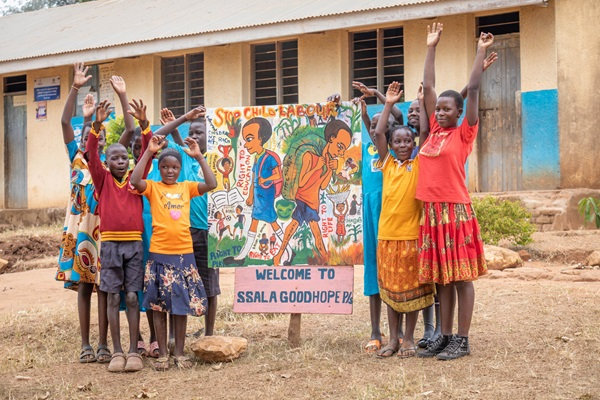
For many rural families, coffee is not just a crop. It is income, stability, and a path to a better future. But when low pay, climate shocks, and few decent earning options put pressure on a household, children can become part of the family’s survival strategy—often through hazardous or age-inappropriate work.
The CLEAR Supply Chains project is working to change that equation. Launched in 2023 with financial support from the European Commission, the initiative is jointly implemented by the International Labor Organization, the Food and Agriculture Organization of the United Nations, the International Trade Centre, and UNICEF. Together, the four agencies are addressing the root causes of child labor in coffee supply chains in Honduras and Uganda.
The project’s strength lies in combining different areas of expertise. Child protection and labor rights are linked with sustainable agriculture, resilient livelihoods, climate adaptation, and market-based solutions. The approach recognizes that preventing child labor requires more than stronger protection systems. It also requires families who can withstand shocks, farms that are safer and more productive, and value chains that are more responsible and sustainable.
Within the partnership, FAO contributes its knowledge of agriculture and rural livelihoods. That means helping farming families earn income from more than one source, adapt to climate change, improve farm safety and productivity, and better understand the risks that can push households toward child labor.
In Honduras and Uganda, the work is already showing results. More than 3,700 farmers and young people have adopted climate-smart practices and diversified their livelihoods, strengthening their ability to cope with climate and economic shocks.










In Uganda, FAO has supported more than 3,000 smallholder coffee farmers through livelihood diversification, climate-smart agriculture, economic empowerment, and digital advisory services. Technology is helping extend that reach. A digital Cooperative Management Information System has been introduced across five coffee cooperatives, profiling 5,109 farmers. Meanwhile, 3,419 farmers have received digital advice on climate-smart agriculture, good agricultural practices, agroforestry, and child labor prevention.
At the household level, 27 Farmer Field Schools are helping 850 farmers—including 552 women—learn practical ways to improve production, strengthen their livelihoods, and respond to climate pressures. Through this school-based approach, more than 1,000 coffee-growing households have received training in climate-resilient and environmentally sustainable production, and 792 have gone on to adopt sustainable coffee production and good agronomic practices.
For some families, resilience has also meant new sources of income. A total of 122 households have set up alternative livelihood activities, including beekeeping, livestock rearing, and poultry farming. These changes matter because stronger production, diversified income, and greater resilience can help families cope without relying on children’s work.
In Honduras, prevention begins with awareness but does not stop there. More than 3,600 actors in the coffee supply chain in Lempira and Copán have been sensitized to child labor risks and prevention. Institutional capacity-building has also strengthened the knowledge and skills of Ministry of Agriculture personnel so that child labor prevention can be integrated into their work.
FAO is also helping coffee-producing households address practical challenges. Some 340 cooperative members have received labor-saving coffee harvesting technologies, including piloting of selective coffee harvesters known as derribadoras selectivas. By easing labor shortages during harvest, these tools can reduce reliance on children’s involvement in hazardous or age-inappropriate work that can keep them out of school and compromise their education.
This economic work is complemented by efforts to improve working conditions and prevent hazardous child labor. More than 2,700 coffee workers and farmers have benefited from measures aimed at strengthening labor protection and making coffee production and processing safer. To reduce children’s exposure to pesticides, small-scale farmers were trained to convert coffee by-products into organic fertilizers, and visual training materials were developed to help farmers prevent children’s exposure to hazardous chemicals.
Young people are not just beneficiaries of this work; they are being equipped to be part of the solution. For the first time in Latin America and the Caribbean, FAO has been piloting its Junior Farmer Field and Life Schools approach in Honduras. The program targets vulnerable children and adolescents aged 12 to 17, with particular attention to girls and Indigenous communities.
Five Junior Farmer Field and Life Schools have reached 211 children and adolescents from coffee-growing communities. These “schools without walls” combine hands-on agricultural learning, games, and physical activities in a safe and participatory environment. Participants are developing age-appropriate skills in climate-resilient agriculture, rural entrepreneurship, organic fertilizer production, and the reuse of coffee by-products. They are also learning to turn local resources into products such as soaps, jams, and flour, generating additional income. Just as important, they are building leadership, communication, teamwork, self-confidence, and problem-solving skills.
FAO has also promoted culturally appropriate and inclusive engagement by working with Indigenous Maya Ch’orti’ communities through a Free, Prior and Informed Consent process, ensuring that local voices and priorities shaped activities on child labor prevention, youth development, and livelihoods.
Building stronger livelihoods is one part of the solution. Knowing where children are most at risk is another. Through DIGICHILD, the project is helping governments and supply-chain actors turn data into action. The digital tool combines geospatial information, survey data, and predictive analytics to identify areas with higher child labor risks within national agrifood systems, helping stakeholders better target prevention and mitigation efforts.
In Uganda, DIGICHILD has already been institutionalized by the Ministry of Gender, Labour and Social Development, and a Sustainability Taskforce is being created to support frequent updates and long-term use. The tool also helps companies improve traceability and due diligence compliance, while supporting development actors and financial institutions in strengthening program accountability and safeguards. Research on climate adaptation, livelihood diversification, and the links between climate change and child labor adds to the evidence base for more effective prevention across coffee supply chains.
As CLEAR Supply Chains continues through May 2027, experiences from Honduras and Uganda are reinforcing an important lesson: preventing child labor also means addressing the pressures families face every day. Stronger incomes, more resilient farms, safer working conditions, innovation, and better access to knowledge, technology, and services can help families cope with shocks without relying on children’s work. The next step is to fully embed successful approaches in local institutions, strengthening ownership by coffee-growing communities and ensuring that progress continues beyond the life of the project.
Because stronger coffee communities do more than produce resilient livelihoods. They can also create safer futures for children.