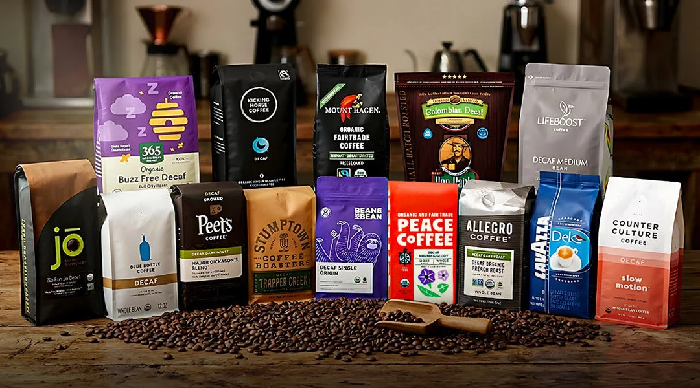
Decaf Coffee Market to Hit $5.2 Billion by 2031
September 4 - 2026
Coffee Geography Magazine
The global decaffeinated coffee market is experiencing a significant transformation, with projections indicating it will grow from US$3.7 billion in 2026 to US$5.2 billion by 2031, representing a compound annual growth rate of 7.0 percent, according to a new study by Wissen Research. This growth signals a fundamental shift in how consumers view decaf, moving it from a niche substitute into a mainstream, premium category that commands serious attention from major players in the coffee industry.
Several factors are driving this robust expansion, with health consciousness at the forefront. This trend is notable among pregnant women, older adults, and those with caffeine sensitivity, who are expanding the addressable market for decaffeinated products. Coffee shops and restaurants are responding by adding more decaf options to their menus, while the rise of specialty and organic coffee is encouraging companies to diversify their decaf portfolios with premium offerings such as traceable single-origin beans and specialty instant varieties.
Technological advancements in the decaffeination process have been instrumental in reshaping consumer perceptions and driving market growth. Methods such as the Swiss Water Process, supercritical carbon dioxide extraction, and improved solvent-based techniques now allow manufacturers to remove caffeine while preserving a coffee bean's original flavor, aroma, and quality. These innovations are helping to narrow the taste gap with regular coffee, challenging the long-held perception that decaf is inferior in flavor. The shift toward clean-label, chemical-free beverages is pushing producers toward eco-friendly decaffeination methods, while improvements in roasting, flavoring, and packaging are helping companies extend shelf life and enhance overall product quality.
The industry has seen several strategic developments that underscore the growing importance of this market segment. In April 2026, Nestlé and Starbucks expanded their Global Coffee Alliance with the launch of new concentrated coffee products, combining Starbucks' coffee expertise with Nestlé's manufacturing reach. Just a month earlier, STORYLINE and Ogawa Coffee partnered to commercialize the ZEN Craft Decaf Process, a next-generation technology developed with Tohoku University that focuses on improved flavor retention. Nestlé also introduced the Nescafé Espresso Concentrated Decaf variant in the UK and Ireland, extending its ready-to-drink portfolio to meet rising demand for convenient decaf options.







Regionally, Europe held the largest revenue share in 2025, accounting for over 40 percent of the global market, supported by a strong coffee culture and rising demand for premium, sustainable products. However, Asia-Pacific is emerging as the fastest-growing region, driven by urbanization, expanding café culture, and growing health and wellness awareness in markets such as China, Japan, India, South Korea, and Australia. The expansion of international coffee chains, online retail platforms, and home brewing culture is creating new opportunities for decaf manufacturers in these developing markets.
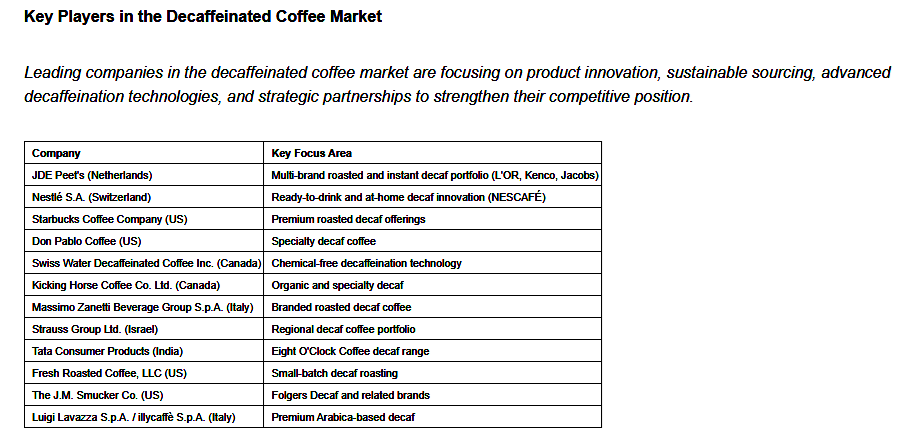
By product type, roasted decaffeinated coffee dominated in 2025, accounting for over 85 percent of global revenue, driven by consumer preference for freshly brewed, café-style flavor at home. In terms of bean species, Arabica led the market with approximately 58 percent revenue share, prized for its smoother, less bitter flavor profile favored by premium and specialty roasters. Leading companies in the space, including JDE Peet's, Nestlé, Starbucks, Swiss Water Decaffeinated Coffee, and Lavazza, are focusing on product innovation, sustainable sourcing, and advanced decaffeination technologies to strengthen their competitive positions.
Despite the positive outlook, the industry faces challenges including higher production costs compared to regular coffee, ongoing technical hurdles in preserving natural aroma and flavor after caffeine removal, and lingering consumer perceptions that decaf is inferior. Nevertheless, as decaffeination technology continues to mature and demand for healthier beverage options grows, decaffeinated coffee is becoming an increasingly important and strategically significant category within the broader global coffee industry. The path forward lies in continued investment in flavor-preserving technology, sustainable sourcing, and expansion into fast-growing regions, particularly across the Asia-Pacific market where new opportunities continue to emerge.