Japanese Lost Coffee Trees, Miraculously Survived War, Bloom Again on a Tiny U.S. territory
July 28 - 2026
Coffee Geography Magazine
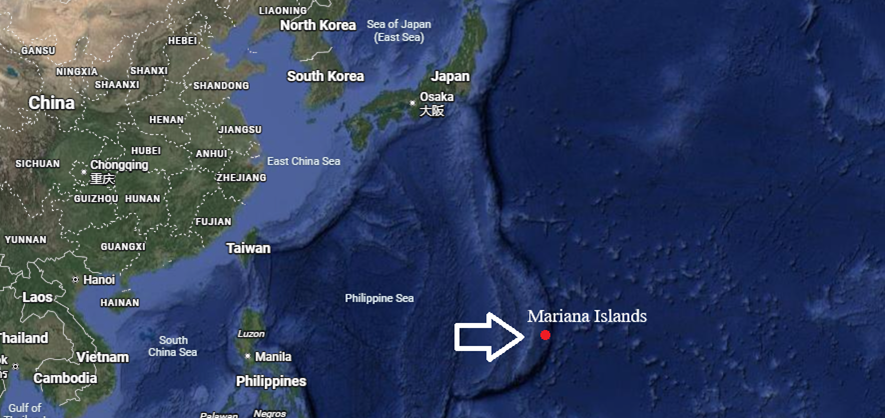
On the slopes of Mt. Sabana, the highest peak on this tiny U.S. territory of Rota Island in the Mariana Islands in the western Pacific, an aroma rises that had been absent for nearly a century. As Kiyokazu Onishi pours hot water over freshly roasted beans, the rich scent of Arabica coffee fills the air — a fragrance he calls nothing less than a miracle.
“The bountiful fruit is indeed the real thing,” the 74-year-old from Ome, Tokyo, said, watching the brown liquid drip. The beans were picked not on a sprawling modern farm, but from living relics of a Japanese colonial past, trees that survived World War II and decades of obscurity in the island’s mountainous jungle.
The story begins in 1920, when Rota, about 2,500 kilometers south of Japan, became part of a League of Nations mandate territory administered by Japan. According to a 1935 Japanese overseas development guidebook, Osaka-based Nanyo Coffee Co. expanded to Rota from Saipan and operated a coffee farm of roughly 198 hectares. But war came. Japanese and U.S. forces clashed across the Marianas, and when the guns fell silent, the plantation — and its coffee — seemed lost.
Onishi’s own connection to the island began in 1993, when he visited as a tourist and fell in love with its unspoiled nature and warm community. He organized a triathlon that grew into a beloved annual event, drawing Japanese athletes for more than two decades. But after the 9/11 attacks, visitor numbers dropped, and in 2016 the race was canceled for good. Searching for a way to revive the island’s fortunes, Onishi remembered a local’s passing remark: there used to be lots of coffee trees in the mountains.
Determined to turn that memory into a specialty product, Onishi shared his idea with Rota’s mayor and close island contacts in 2017. The next year came the breakthrough: coffee trees had been discovered halfway up Mt. Sabana.
In 2019, Onishi brought in Naomi Nakahira, 57, head of the agricultural research department at major Japanese coffee company UCC. The moment Nakahira saw the trees’ characteristic brown new shoots, he had a hunch. “I thought they might be the Typica variety of Arabica coffee beans that Japanese had brought to the island,” he said, recalling how Japanese emigrants had carried the variety from Hawaii to Taiwan and Saipan generations earlier.








A research institute later confirmed the trees were indeed Typica. The evidence on the ground only deepened the historical connection: searchers found an old bottle from Dai Nippon Brewery, a predecessor of both Asahi and Sapporo breweries, near the trees. For Nakahira, that was the clincher. “It was almost certain that the area where the trees are growing was the site of Nanyo Coffee’s plantation, and that they would be able to make popular coffee using the beans.”
Today, Nakahira provides technical guidance at a new plantation where 1,000 young saplings have been transplanted close to the original grove. David Calvo, 61, who assisted with the search and now manages the plantation, sees the coffee as much more than a crop. “If approached thoughtfully, coffee could become a product that reflects the pride, resilience and uniqueness of our island community,” Calvo said. “It could be something we are proud to share with visitors and friends around the world while creating lasting economic opportunities for future generations.”
The project is now preparing to brand its harvest as “Rota Blue Coffee,” a name inspired by the island’s brilliantly clear surrounding sea. Tasting events in Japan are being planned, and the goal is to establish the coffee as a local specialty within a few years.
For Onishi, every brewed cup carries a deeper meaning. “We are able to enjoy the coffee not only because the island was not totally burned during the war, but also because we were able to utilize a series of coincidences and cooperate with people on the island,” he said. “I want to make it a symbol of friendship between Japan and Rota.”