
European Coffee Brewing Centre marks 50 years as a global testing laboratory for brewers and grinders
June 19 - 2026
Coffee Geography Magazine
Half a century ago, the morning cup of coffee was a gamble. Water temperatures often fell short, brewing times missed the mark, and consumers were left with a lackluster drink. That changed in 1976, when a Dutch-made Moccamaster became the first coffee brewer to earn the seal of approval from the European Coffee Brewing Centre (ECBC), ushering in an era of precision that has quietly revolutionized how the world brews.
The ECBC, founded in 1972 by the Norwegian Coffee Association as Europe’s first independent testing laboratory for coffee preparation, this year celebrates the 50th anniversary of that landmark certification. The partnership between the testing center and manufacturer Technivorm not only elevated the humble drip coffee maker—it laid the groundwork for a global standard that now spans home kitchens, professional cafés, and the specialty coffee industry.
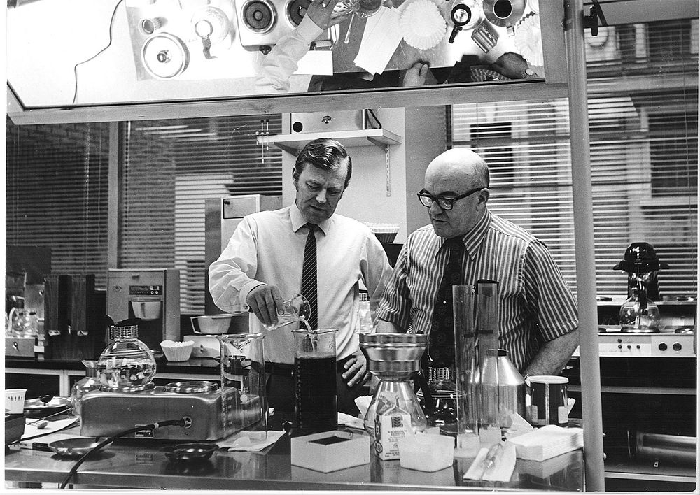
Since 1972, ECBC has been Europe’s leading independent testing body for coffee‑brewing equipment.
“Before 1976, there were few standards for electric coffee brewers. Many machines on the market operated at temperatures that were too low, and brewing times were either too short or too long,” the Centre’s historical records note. The approval program demonstrated that with the correct time and temperature, filter coffee could be brewed perfectly. The result was a surge in the popularity of drip coffee, particularly in Norway, where the ECBC is headquartered.
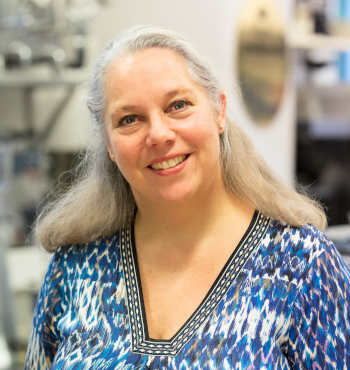
Marit Lynes - Managing Director - Norwegian Coffee Association
Marit Lynes, Managing Director of the Norwegian Coffee Association, says the program’s evolution reflects sustained consumer demand for quality. “More and more manufacturers are joining the program, and the range of approved products has never been bigger,” Lynes said. “Easy access to approved equipment across all price ranges benefits consumers.”

Stig Hiller and Ole Sønstebø work on the certification program and regularly test brewing equipment at the test center in Oslo.
The science behind the seal is older than the center itself. Groundbreaking research conducted in the United States during the 1950s by the National Coffee Association first defined how flavor could be systematically linked to brewing parameters. Those findings—centered on ideal water temperature, contact time, and extraction—became the backbone of the ECBC’s testing protocols.
Since then, the approval program has expanded far beyond the home drip brewer. Today the ECBC tests and certifies commercial batch brewers, bean-to-cup machines for the professional market, and home coffee grinders. In 1997, the Specialty Coffee Association of America (SCAA) launched its own certification program, modeled on the same principles. The ECBC and the Specialty Coffee Association (SCA) have enjoyed a long-standing partnership, and since 2023 the Oslo laboratory has served as the official testing partner for the SCA Certified Home Brewer Program, meaning every brewer bearing that global mark is tested in Norway.








“ECBC is just as relevant to manufacturers and consumers today as it was 50 years ago,” Lynes added. “Demand for high-quality coffee remains strong, and coffee enthusiasts around the world appreciate excellent raw materials. To achieve the best results, brewing equipment must operate with the correct time and temperature.”
As the specialty coffee movement continues to surge, the legacy of that first certified Moccamaster endures—one precise, perfectly brewed cup at a time.
Established in 1972 by the Norwegian Coffee Association, the ECBC is Europe’s first independent testing laboratory for coffee brewing equipment. Located in Oslo, Norway, it remains the world’s largest and most advanced center for coffee research and education in coffee preparation. Its approval program has certified hundreds of brewers and grinders, helping consumers and professionals achieve consistent, high-quality coffee.