
Starbucks Marks Milestone of 100 Million Coffee Trees Donated as Climate Pressures Reshape Coffee Farming
March 31 - 2026
Coffee Geography Magazine
Starbucks has achieved a significant milestone in its efforts to secure the future of high-quality arabica coffee, announcing it has now donated 100 million coffee trees to farmers—a move aimed at helping producers adapt to mounting climate challenges.
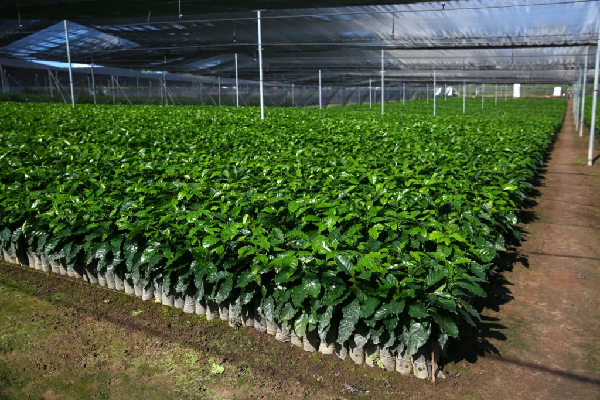
The initiative, which began in 2017, has distributed trees cultivated from varieties specifically selected for their resilience under climate-adverse conditions. Donations initially focused on farmers in El Salvador, Guatemala, and Mexico. Now, Starbucks has committed to delivering an additional 50 million trees to farms across other strategic coffee-growing regions, including Ethiopia, Tanzania, Indonesia, Colombia, Costa Rica, and Honduras, while continuing support for the original three countries.
The company originally set the goal of donating 100 million trees to assist smallholder farmers in replacing aging or disease-prone plots and boosting farm productivity. Many of the trees originate from research conducted at Hacienda Alsacia, Starbucks' global research and development farm in Costa Rica. There, agronomists examine hundreds of hybrids and varieties, alongside soil health, plant nutrition, and disease tolerance, in an effort to equip farmers with the tools to confront a rapidly shifting climate.
Central to the effort is a nearly three-decade-long collaboration with Conservation International. The organization has helped embed environmental and social safeguards into the program—ranging from forest protection and shade management to ensuring farmer rights are upheld. Throughout the initiative, Conservation International has worked directly with farmers, nursery operators, and suppliers to verify that growers receive quality seedlings and that established safeguards are properly implemented. The oversight, according to the organization, helps keep the program responsive to farmer needs while delivering meaningful benefits across the coffee supply chain.
"With climate change threatening the future of coffee, building resilient farming systems has never been more urgent," said Raina Lang, senior director of sustainable coffee at Conservation International. "Cross-sector collaboration between business, NGOs and communities is the future of conservation, as it can lead to positive outcomes for climate, people and livelihoods."
When matched to the right growing conditions, healthy coffee trees can sustain a family's livelihood for decades. Yet many farmers continue to rely on trees that struggle under climate pressure or remain vulnerable to diseases such as coffee leaf rust. Replanting with more resilient varieties—particularly when paired with agronomy support and access to financing—offers a pathway to more stable production over time.
Starbucks has sought to address the financing gap through its Global Farmer Fund. Last year, the company reached its 2025 target of providing $100 million in financing to smallholder farmers worldwide. The fund partners with nongovernmental organizations, fund managers, and financial institutions to help farmers secure capital for farm renovation, infrastructure upgrades, and greater financial stability. Many loan recipients also receive technical assistance in agronomy, business planning, and price risk management, along with training to help them understand and adapt to climate risks—support designed to benefit farmers well beyond the life of the loan.








Such gains, Starbucks notes, help extend the viability of coffee production in regions experiencing climate stress while strengthening the long-term resilience of the global coffee supply.
The 100 million tree milestone, while significant, marks a waypoint rather than an endpoint. The forthcoming donation of an additional 50 million trees builds on the company's longstanding commitment to responsible sourcing and on-farm innovation, aligning with its broader focus on quality and craftsmanship.
"The future of coffee depends on action," said Ricardo Arias-Nath, senior vice president of global coffee and tea and president for Latin America and the Caribbean at Starbucks. "We are investing in farmers, protecting coffee landscapes and scaling solutions that help strengthen resilience across our supply chain. When we lead with purpose, we help support the future of coffee for everyone."
With 100 million trees already in the ground and another 50 million pledged, Starbucks is working alongside farmers to bolster climate resilience, improve productivity, and help ensure that high-quality arabica coffee remains viable for years to come.