In Indonesia's Coffee Highlands, Beekeeping Offers a Lifeline for Farmers and Forests
November 15 - 2026
Coffee Geography Magazine
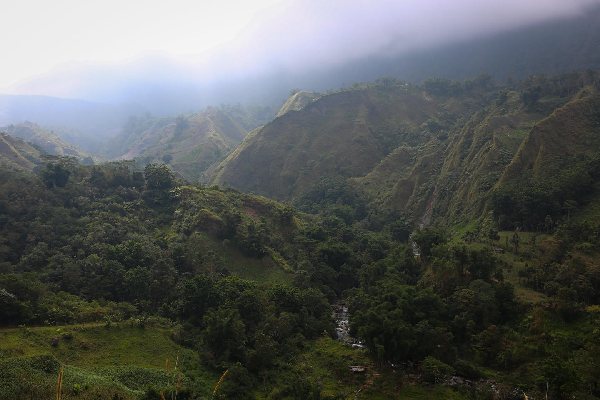
High on the steep, forested slopes of South Sulawesi, where the cool mountain air nourishes generations-old coffee farms, a quiet transformation is taking root. For farmers in Kahayya Village, the surrounding forest has long been viewed as a backdrop to their livelihoods. Now, it is becoming something more: a partner in survival.
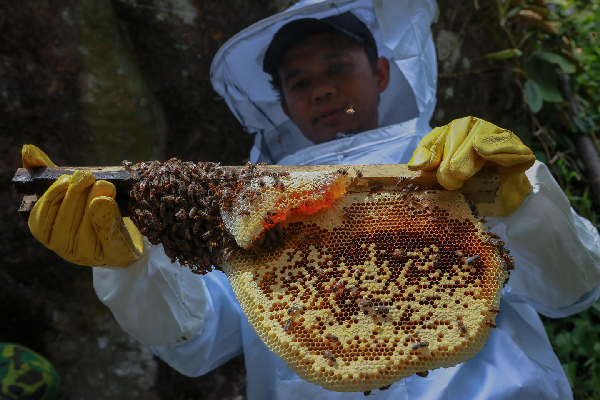
Abdul Kadir harvests honey from an Apis nigrocincta colony in Kahayya Village
The village, perched over 1,000 metres above sea level, is renowned for its Arabica coffee. As demand for Kahayya's beans grows, so does the pressure to expand production. Across South Sulawesi, coffee output reached 30,186 tonnes in 2024, a nearly 10 percent increase from the previous year. But this growth carries a hidden cost. When diverse vegetation gives way to monoculture plantations, habitats for pollinators shrink, and the land loses its natural resilience. On these steep slopes, where heavy rainfall already triggers landslides that can sever the village's only road to Bulukumba, the loss of tree cover is a direct threat to both farms and families.
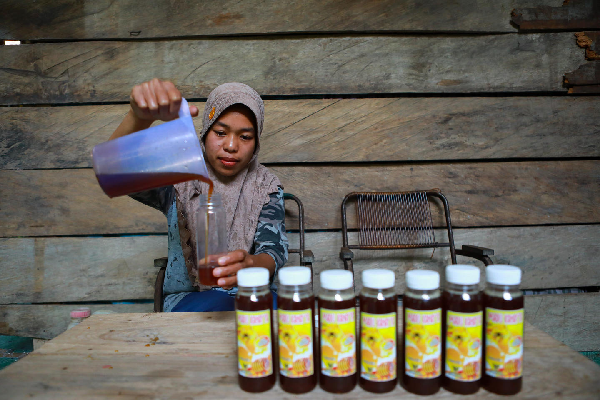
Harvested honeycomb is processed and packaged
Yet a new initiative is showing that coffee and biodiversity can thrive together. Through the Biodiversity Finance Initiative (BIOFIN), implemented by UNDP in partnership with Indonesia's Ministry of National Development Planning and the national zakat board (BAZNAS), farmers are learning to keep bees—specifically the native black-banded honey bee, Apis nigrocincta. Using a "Green Zakat" approach, zakat funds are channelled into training and equipment, helping farmers move from occasional wild honey collection to managed beekeeping.
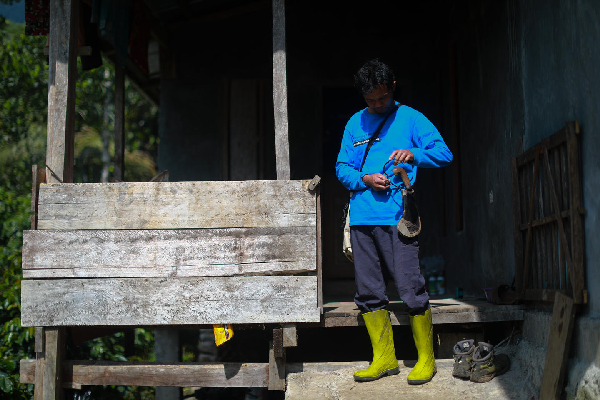
Abdul Kadir, a coffee farmer who has also taken up beekeeping
Abdul Kadir, a lifelong coffee farmer and local group leader, has witnessed the shift. After a four-day training programme in December 2025, he and his peers learned to attract wild colonies into purpose-built hive boxes. "After the training, farmers have become more selective in choosing which trees to cultivate and plant, so they can also serve as food sources for the bees," Kadir said. So far, farmers have set up 20 wooden hive boxes and identified around 100 rock cavities as nesting sites. Two boxes and roughly 80 cavities have already been colonized—an early but encouraging sign.









For coffee farmers, the benefits are twofold. The bees provide a potential new income stream through honey, while their pollination services support the health of the very crops—coffee, cacao, and avocado—that sustain local families. Just as importantly, protecting the flowering trees and forests the bees depend on also protects the soil and water that coffee farms need to survive.
The honey enterprise is still in its infancy, and a reliable market will take time to establish. But for households in Kahayya, where farming remains central to income, it offers a rare opportunity: a second harvest from the same landscape. Women in farming families are already taking part in post-harvest processing and product development, bringing more community members into the business.
For Kadir and his fellow farmers, coffee remains the backbone of their livelihoods. Now, they are learning to make room for another harvest. The bees, as they have for generations, still nest in the trees and rocks of Kahayya. What is changing is how the community sees their value—not as a hidden curiosity, but as a partner in a more resilient future.