Assessing Carbon Credit Readiness in African Coffee Agroforestry
October 17 - 2026
Coffee Geography Magazine
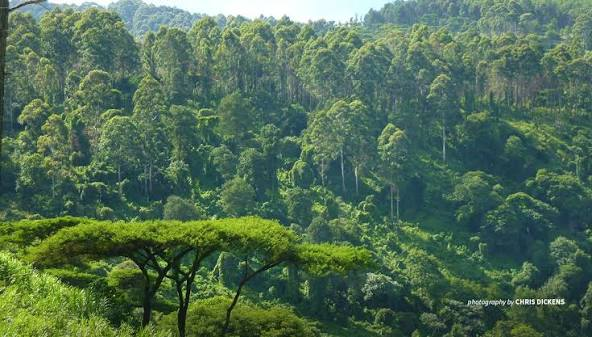
The global race to scale nature-based climate solutions has overlooked one of the most structurally integrated, biodiverse ecosystems on earth: the African coffee forest. While international headlines frequently focus on large-scale commercial reforestation or the conservation of vast, untouched national parks, traditional smallholder coffee agroforestry systems are quietly performing Herculean carbon sequestration. According to an extensive industry analysis by Coffee Geography Magazine, millions of smallholder farmers across the continent are actively protecting these unique ecosystems, treating their standing trees as critical multi-generational assets. However, a major structural blind spot remains. Because these complex systems are not being assessed separately for carbon credit readiness, an immense reservoir of global carbon financing remains completely unlocked.
A Continental Comparison: Scaling the African Canopy
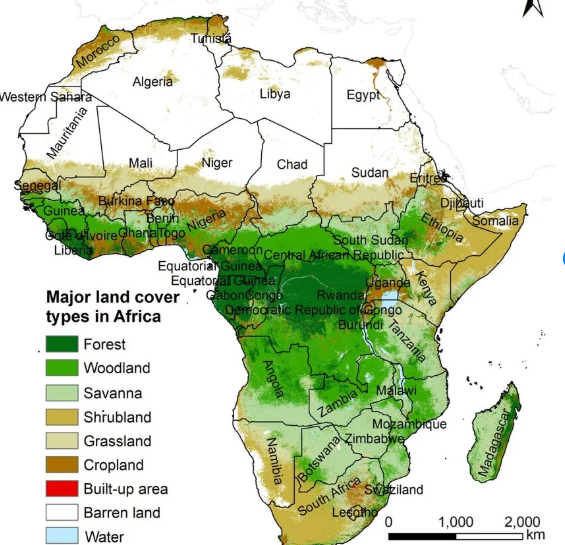
To understand the sheer scale of the landscape within which these coffee systems sit, it is necessary to examine the macro forestry data. Africa’s total forest cover exceeds 624 million hectares, representing roughly one-fifth of the entire continent's landmass. When placed into a global context, this footprint dwarfs traditional Western conservation zones. The entire European Union holds approximately 159 million hectares of forest land, meaning Africa’s forested ecosystems are nearly four times larger than the total forest footprint of the EU combined.
Within this staggering expanse, native coffee forests play a disproportionately vital role. Unlike uniform commercial timber plantations, coffee forests are complex, living webs where wild or semi-forest coffee grows natively beneath high-canopy indigenous trees, forming dense, multi-tiered habitats that maximize carbon storage density per hectare.
The Asset in the Canopy: Yields and Microclimates
For the African smallholder, preserving the forest canopy is an active, strategic business decision rather than a passive act of conservation. The comprehensive findings from Coffee Geography Magazine highlight that farmers explicitly preserve their surrounding forests as part of their core agricultural assets. This deliberate protection directly translates to enhanced coffee yields and superior cup quality through several highly integrated ecological mechanisms.
A closed canopy of indigenous shade trees shields delicate coffee bushes from volatile temperature spikes and intense solar radiation, which effectively stabilizes the local microclimate and preserves essential soil moisture. Furthermore, the continuous natural drop of leaf litter from senior trees returns vital organic matter to the soil, boosting nutrient cycling and naturally shielding smallholders from the crushing costs of synthetic fertilizers. In regions like southwestern Ethiopia, these wild and semi-forest management systems also preserve a deep genetic reservoir of wild Arabica, granting the crops natural, evolving resistance to localized pests and climate shock. By investing in the standing forest, smallholders directly secure the premium value and longevity of their harvest.
The Readiness Gap: An Assessment Blind Spot
Despite the immense carbon-stock potential of these landscapes, a massive structural bottleneck stifles their integration into global carbon markets. Coffee Geography Magazine warns that coffee forests are currently not assessed separately for carbon credit readiness. Instead, they are lumped into broad, generic international categories like "Agriculture, Forestry, and Other Land Use" (AFOLU) or generalized agroforestry buckets, which causes severe market inefficiencies.
Standard carbon accounting models are built for uniform tree plantations or absolute avoided-deforestation projects, meaning they struggle to accurately baseline and quantify the complex, dynamic carbon fluxes of a multi-species coffee forest managed by thousands of small individual farms. Because they are not assessed independently, the unique high-value attributes of coffee forests—such as preserving wild genetic crop diversity and supporting local livelihood resilience—are ignored by generic carbon registries. This lack of distinct, streamlined readiness frameworks drives up geospatial tracking costs for developers, ultimately preventing smallholders from capturing a fair share of the voluntary carbon market.









Elevating the Value of Shade
Africa’s 624 million hectares of forest cover hold a critical key to global climate mitigation, and its coffee forests sit squarely at the intersection of conservation and commercial viability. For generations, smallholders have managed these systems to safeguard their yields and secure their livelihoods. To truly honor this stewardship and mobilize climate finance effectively, global carbon registries and policymakers must transition away from sweeping AFOLU definitions. Creating distinct, tailored carbon credit readiness frameworks explicitly designed for coffee forests will protect African biodiversity, enrich smallholders, and provide the global market with the high-integrity, verified carbon assets it desperately requires.