ILO Expands Decent Work Initiative Across Ethiopia’s Coffee Heartlands
September 23 - 2026
Coffee Geography Magazine
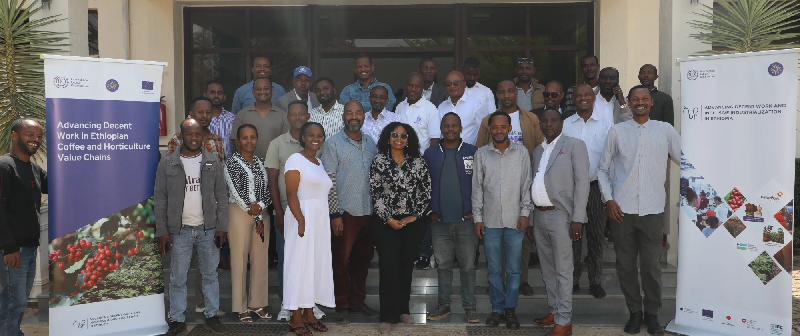
The International Labor Organization (ILO) is scaling up its decent work efforts across Ethiopia’s coffee-producing regions, with capacity-building trainings aimed at strengthening labor compliance and enterprise sustainability.
The trainings, under the One ILO Siraye Program, brought together government representatives, employers, workers’ organizations, and other coffee value chain stakeholders from Sidama and South Ethiopia Regional States. The goal was to equip participants with practical knowledge on labor law, working conditions, wages, productivity, and social dialogue.
Coffee remains a vital export sector for Ethiopia and a key income source for rural households. Yet it faces persistent labor challenges, including low wages, informal and seasonal employment, weak enforcement of labor standards, gender wage disparities, and limited data on working conditions. These issues are increasingly tied to market access, as international buyers demand greater sustainability, traceability, and human rights due diligence.
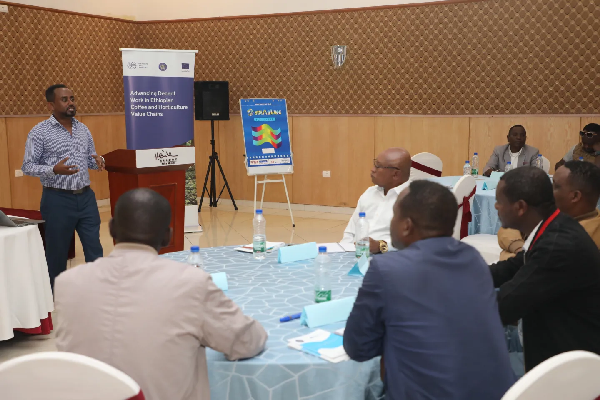
The ILO trainings addressed these interconnected challenges by covering International Labor Standards and fundamental labor rights, including child labor, forced labor, discrimination, occupational safety and health, and freedom of association and collective bargaining. Participants also examined Ethiopian labor law provisions on employment contracts, working hours, overtime, leave, and protections for young and women workers.
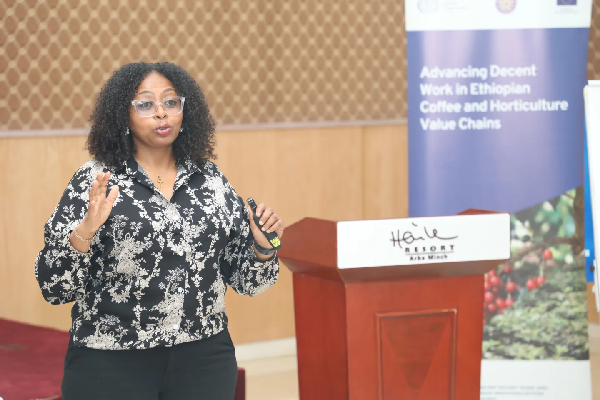
A major focus was productivity and quality, introducing practical approaches such as 5S workplace organization, standard operating procedures, and waste reduction. Wage discussions explored the differences between minimum, living, and adequate wages, as well as the role of collective bargaining and social dialogue in wage-setting.
“Capacity-building is a critical component of the ILO-supported intervention because the achievement of decent work and sustainable value chains depends on the knowledge, skills and coordination of all actors involved,” said Behailu Zebdios, Acting Director of Harmonious Industrial Relations at the Bureau of Labor and Skills, South Ethiopia Regional State.









The trainings used case studies and action planning to help participants turn technical knowledge into practical next steps. A key expected result is that participants will carry out concrete actions to improve labor conditions, productivity, and compliance in the coffee sector.
The initiative draws on two complementary projects: the EU-funded “Advancing Decent Work in Ethiopian Coffee and Horticulture Value Chains” project and the BMZ-funded “Setting Adequate Wages: A Focus on Agriculture (SAW-A)” project. Together, they support evidence-based wage-setting, labor inspection capacity, and social dialogue.
By strengthening labor compliance and workplace practices, the ILO aims to improve both worker protection and enterprise competitiveness, preparing Ethiopian coffee for responsible international markets.