
Ethiopia Graduates 147 Coffee Professionals as Sector Achieves Record Global Milestones
September 9 - 2026
Coffee Geography Magazine
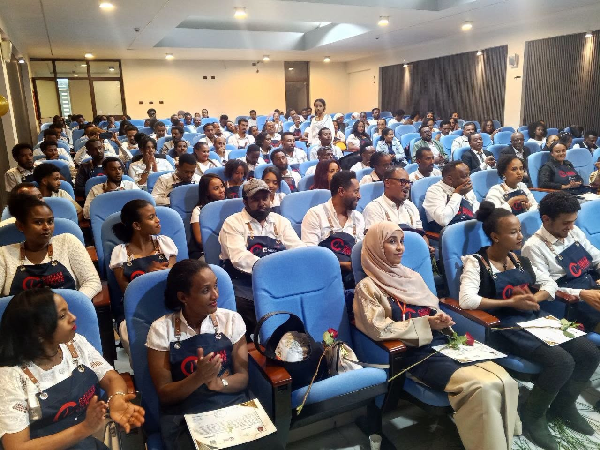
The Ethiopian Coffee and Tea Authority (ECTA) Training Center has graduated 147 students in its 17th commencement ceremony, marking another significant step in the country's effort to build a skilled workforce for its world-renowned coffee industry.
The graduation program, held at the Authority's head office, recognized professionals trained in Barista skills, Coffee Tasting (Cupping), Coffee Marketing and Documentation, and Coffee Roasting. With this latest cohort, the center has now produced over 800 trained professionals across various vocational sectors since its establishment.
Dr. Adugna Debela, Director General of ECTA, addressed the graduates, emphasizing that the Authority is committed to bridging the professional supply gap beyond coffee development and marketing. He urged the new graduates to serve as ambassadors for Ethiopian coffee, competently promoting the nation's prized beans wherever they are deployed.

Dr. Adugna Debela, Director General of ECTA
Mrs. Frehiwot Assefa, head of the Training Center, reaffirmed the center's dedication to strengthening the coffee sector with a competent workforce. The center operates in coordination with UNIDO, the Ministry of Labor and Skills, the Ministry of Agriculture, and other partner organizations. Dr. Kasaye Tolesa, UNIDO Representative, was present at the event and delivered a brief congratulatory message to the graduates.
The graduation comes at a time when Ethiopian coffee is reaching unprecedented heights on the global stage. Ethiopia, recognized as the birthplace of Arabica coffee, has solidified its position as Africa's largest coffee producer and a top global exporter. The country's coffee production for the 2025/26 marketing year is projected to reach 11.6 million 60-kilogram bags, equivalent to approximately 694,000 tons.
In a landmark achievement, Ethiopia earned a record over 3 billion US dollars from coffee exports during the 2025/26 fiscal year. The price per tonne of Ethiopian coffee reached $7,500 at the global market, up from $6,000 the previous year. The country's coffee-producing capacity per hectare has also risen from 600 kg to 1,000 kg over the past five years.










Saudi Arabia, Germany, and China have emerged as the top three destinations for Ethiopian coffee exports. Notably, China has overtaken the United States to become the third-largest buyer, with Ethiopia exporting nearly 48,000 tonnes valued at $347 million in the 2025/26 fiscal year. China's zero-tariff policy and growing consumer demand—particularly among the youth—have significantly boosted Ethiopian specialty coffee's competitiveness in the Asian market.
Ethiopia has also expanded its international reach from 60 to 84 countries. The recent launch of the Specialty Coffee Association of Ethiopia (SCAE) aims to further elevate the country's presence in the global specialty market, with plans to organize "Best of Ethiopia" auctions and strengthen traceability and quality standards. The government envisions doubling coffee export earnings to $6 billion annually within the next five years.
With over 15 million people depending on the coffee sector for their livelihoods, initiatives like the ECTA Training Center are vital for sustaining this growth. By cultivating skilled professionals who can navigate the complexities of the global coffee market—from cupping and roasting to marketing—Ethiopia is ensuring that its coffee heritage translates into lasting economic opportunity and international recognition.