April 28 - 2021 Coffee Geography Magazine
A report by the Chicago-based Air Quality Life Index
published in 2019 revealed that life-expectancy has been reduced by a couple of
years due to atmospheric pollution. It also revealed that for a few days during
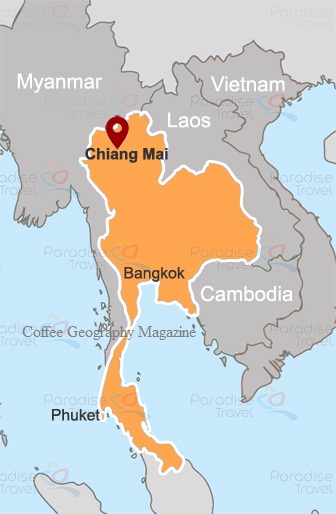
the monitoring period, Chiang Mai, in Thailand was the most polluted city in
the world, far exceeding international standards set for maximum levels of
pollution.
One of the main factors contributing to these elevated
levels is the practice of deburring – the combustion of agricultural residues
to increase fertility and prepare the soil for the next season – used primarily
in the cultivation of corn. In addition, the use of spray pesticides and also
contributes to pollution especially during the rainy seasons when these chemicals
flow into local waterways.
Those who frequent Mary Queen of Peace parish in
ChaeHom suffer the consequences of these practices.

Father Bruno Rossi
“When the faithful approach the altar to receive the
Eucharist”, explains Father Bruno Rossi, “we have noticed that their hands are
covered with red dust, a residue of pesticides. That was the turning point for
us: we realized that were placing the Body of Christ into wounded hands, a real
and true life-giving action that revealed signs of death”.
The Italian missionaries, therefore, suggested that
the coffee plantations be extended from the mountainous areas of the territory
to the hill country downstream. Father Bruno recounts that the idea of
initiating organic farming arose when some of the beans grown by the families of
students residing in the parish were tasted. The product was high quality, but
the roasting procedures used in the area did not create the same aroma the
missionaries were used to in their native country. Thus, with the arrival of
the first roasting machine in 2012, and then making other improvements, they
began both the organic production of coffee and a marketing process. These
enhanced both the quality of the product and the quality of life for those
living in the area. The sale of the coffee at competitive prices permitted the
restoration of dignity to the farmers living in the villages of ChaeHom, as
well as the creation of scholarships for students.

Students at the Mary Queen of Peace parish
The production of “Bruno's Coffee” began more than ten
years ago, even before the publication of Laudatosi’. “We tried to
take into consideration both work and rest”, Father Rossi explains, “as well as
the community’s desire to remain healthy within a safe environment. We also
tried to take care of our common home, respecting nature and harmonizing our work
with it. This is a need that comes from deep within, an attentiveness that
brings with it values that are fully shared even in the Asian culture.
Jokingly, Father Bruno even compares his parishioners
to coffee beans – each one is different from the others, each has his or her
own unique and unrepeatable story. It is the roasting that makes the
difference. That is, the capacity of bringing out the best in everyone, just
like good teachers do with their students. “We produce, package and ship about
800 kg of roasted coffee per month throughout Thailand. The largest orders come
generally from hotels and from curious tourists who wants to taste Italian-roasted
coffee”, the pastor relates. “The pandemic has created a lot of difficulties
connected to the lack of tourists. But this has not halted the project.”